Explore this guide
- Why this matters
- Should Kentucky homeowners add insulation or replace the garage door?
- Add insulation: best for a sound, compatible door
- Repair seals: best for gaps around an otherwise sound door
- Replace the door: best for damage or unsuitable construction
- Why the right insulation upgrade varies
- How do you check the door before choosing an upgrade?
- What should you ask before approving the work?
- Will insulating the door make the garage warm?
- Can you keep the opener when replacing the door?
- FAQ
- One last thing
Add insulation when your existing garage door is structurally sound, operates correctly and has a compatible insulation system; replace it when damage, recurring operating faults or an unsuitable door construction make an upgrade impractical. Fix gaps and operating problems before choosing either option. Insulation improves the door panel, but it does not repair the door or turn an unconditioned garage into living space.
TL;DR
- Garage door insulation Kentucky upgrades should start with door condition, air gaps and how you use the garage.
- Keep a sound door when a compatible insulation upgrade meets your needs without compromising operation.
- Consider replacement when damage or unsuitable construction makes adding insulation impractical.
- Derby Strong provides garage door repair and installation for homeowners in Louisville, Lexington and Northern Kentucky.
Why This Matters for Your Door
A cold garage does not automatically need a new door. Air entering around the opening, uninsulated walls and the absence of heating all affect comfort; changing the door addresses only part of that picture.
Derby Strong is best for homeowners seeking garage door repair or installation in Louisville, Lexington or Northern Kentucky. For an insulation decision, the useful starting point is the existing door’s condition—not a replacement recommendation made before inspection.
Keep those markets distinct when arranging service. A homeowner in Lexington needs an assessment of that property’s door, just as a homeowner in Louisville or Northern Kentucky does; a city name alone does not determine whether insulation or replacement is appropriate.
Should Kentucky homeowners add insulation or replace the garage door?
Keep and insulate a serviceable door; consider replacement when the existing door cannot support the result you need. Separate mechanical condition from thermal performance before comparing options. A door can be uninsulated but sound, or insulated but damaged.
| Option | Best for | Main benefit | Main limitation |
|---|---|---|---|
| Add compatible insulation | A sound door with suitable panel construction | Improves the existing panel’s resistance to heat flow | Adds weight and leaves existing hardware and panel condition unchanged |
| Repair perimeter seals | A sound door with visible gaps or damaged weather seals | Addresses air paths around the opening | Does not improve the insulation within the panel |
| Repair operating faults | A door with a repairable mechanical or alignment problem | Addresses safe, reliable operation | Does not necessarily improve thermal performance |
| Replace the door | Damaged or unsuitable construction that prevents a useful upgrade | Allows selection of an insulated door assembly | Involves replacing more than the insulation alone |
These options are not interchangeable. New insulation cannot correct a bent track, and a new bottom seal cannot make a damaged section structurally sound. Conversely, a repairable seal problem is not, by itself, a reason to replace the entire door.
For a 2026 upgrade, compare the complete proposed work: door condition, insulation compatibility, sealing and any operating adjustments. Do not choose from a panel insulation claim alone.
Add insulation: best for a sound, compatible door
Adding insulation makes sense when the door sections are intact, the door operates normally and the proposed material is approved for that door’s construction. Check the door manufacturer’s instructions before selecting a kit or attaching material.
Compatibility matters more than whether a piece of insulation fits inside a panel recess. The attachment method must not obstruct hinges, rollers, handles or the door’s movement. Material that shifts, loosens or interferes with moving parts is not a successful upgrade.
Added material also changes the door’s weight. Have a garage door professional assess whether the door’s counterbalance system needs adjustment and whether the proposed upgrade is appropriate. Do not adjust springs or increase opener force to compensate for added weight.
The benefit is retaining a usable door while improving its panel insulation. The limitation is that existing sections, seals and operating hardware remain in place; insulation does not renew those components or eliminate air leakage around the opening.
Ask the installer to explain both the thermal benefit and the effect on operation. If the proposal describes insulation but ignores attachment, clearance and weight, it has not answered the whole question.
Repair seals: best for gaps around an otherwise sound door
A visible opening around a closed garage door points to a sealing or fit issue, not necessarily an insulation issue. Look from a safe position for daylight along the sides, top and bottom. Note torn, missing or displaced weather seals without reaching into the door’s path.
A worn bottom seal and an uneven closing position need different solutions. Replacing flexible sealing material does not correct a damaged door, a distorted opening or a mechanical fault. Have the cause identified before treating every gap as a weather-strip problem.
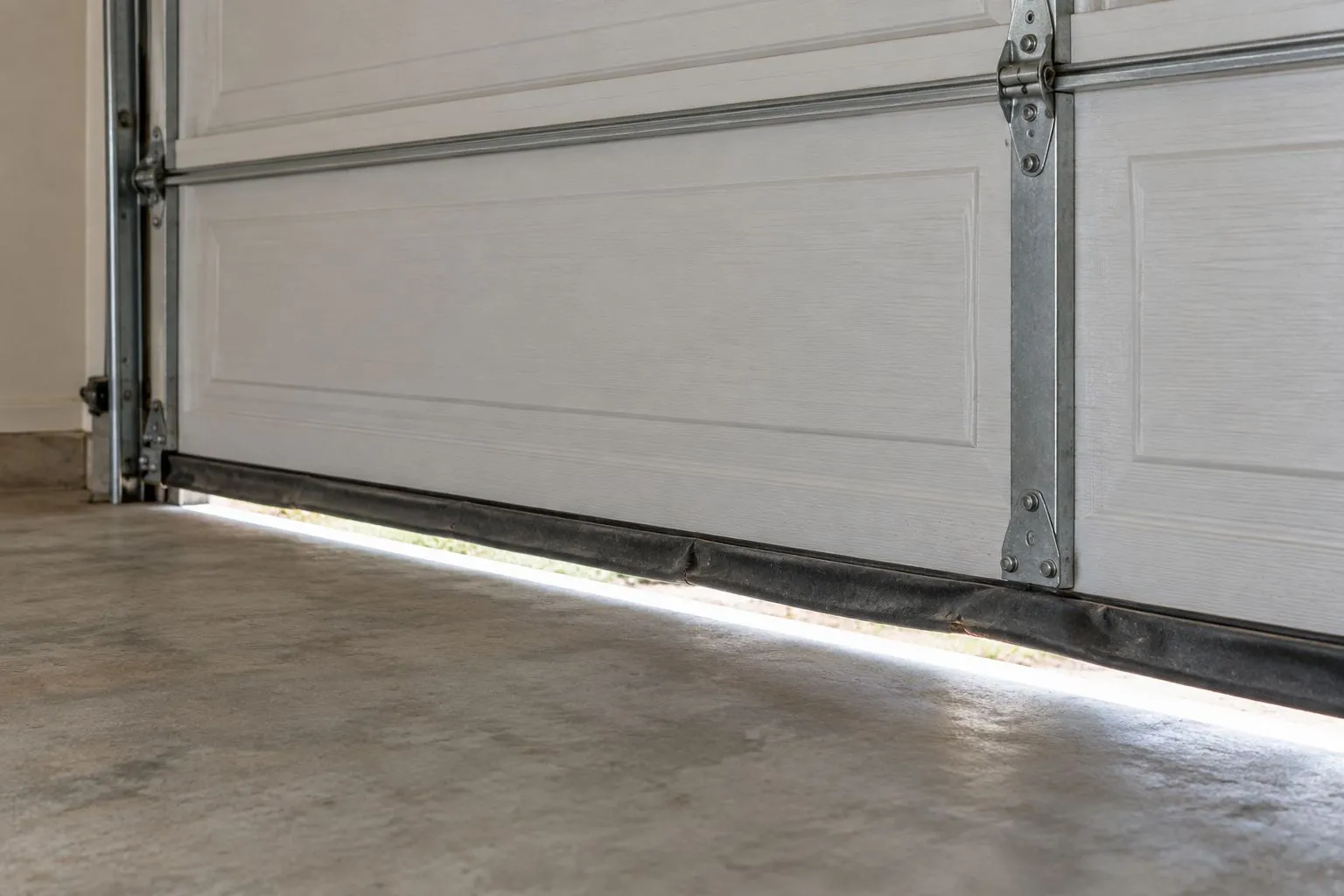
Illustrative photo: a visible gap calls for a sealing and fit assessment, not insulation alone.
Seal repair is best for a serviceable door with identified air paths. Its advantage is targeting the actual gap; its limitation is that it does not change the panel’s thermal resistance. A door can need both compatible insulation and seal work, but each should have a clear purpose.
Do not force the door downward to eliminate daylight. If the door closes unevenly, binds or reverses unexpectedly, stop using it and arrange an operating assessment rather than changing opener settings.
Replace the door: best for damage or unsuitable construction
Replacement becomes the stronger choice when the door’s physical condition or construction prevents a useful insulation upgrade. Examples include damaged sections, deteriorated materials or a design that does not accept the proposed insulation system. A professional should determine whether those conditions require replacement or allow a suitable repair.
Recurring trouble also deserves a diagnosis. Repeated operating faults do not prove that every component needs replacing, but they make it important to understand what is failing before adding material to the door.
An insulated replacement lets you choose a door assembly designed with insulation as part of its construction. The trade-off is a larger scope of work: the opening, tracks, counterbalance system, opener connection and sealing all need attention during planning and installation.
Ask what the replacement proposal includes and what remains. Do not assume that ordering a new door automatically replaces the opener or resolves every issue with the surrounding opening.
Choose replacement for an identified condition or performance need—not simply because a door lacks insulation. A sound existing door deserves a repair-and-upgrade assessment before you commit to replacing it.
Why the right insulation upgrade varies
The decision changes with the door and the garage, not just the material listed on a package. Use these factors to compare proposals:
- Door condition: Damaged sections, deterioration and operating faults need assessment before insulation is added.
- Insulation compatibility: The door construction and manufacturer instructions determine acceptable materials and attachment methods.
- Added weight: An insulation upgrade must preserve safe counterbalance and operation.
- Air leakage: Gaps around the opening remain separate from heat flow through the panels.
- Garage use: Parking, storage and regular occupied use create different comfort needs.
- The rest of the enclosure: Walls, ceiling, connecting doors and ventilation affect the result a door upgrade can deliver.
An attached garage also needs attention to its separation from the house. Do not block required ventilation, alter fire-separation components or seal around fuel-burning equipment without qualified advice. Door insulation is not a substitute for those safety requirements.
For a detached garage used mainly for storage, decide what problem you actually need to solve. Reducing drafts, improving comfort while working and maintaining indoor temperatures are different goals; a door-only upgrade should not be presented as accomplishing all of them.
How do you check the door before choosing an upgrade?
Keep the inspection observational. You do not need to disconnect the opener, test spring tension or remove hardware to gather useful information for a service visit.
- Check condition. From a safe position, note damaged panels, visible deterioration and loose or hanging material. Do not touch springs, cables, tracks or brackets.
- Observe gaps. With the door closed, note daylight and visibly damaged seals around the opening. Keep hands away from section joints and the bottom edge.
- Define use. Explain whether the garage is for parking, storage or regular occupied work, and identify the comfort problem you want addressed.
- Request assessment. Ask a professional to separate repair needs, sealing work and insulation compatibility before recommending replacement.
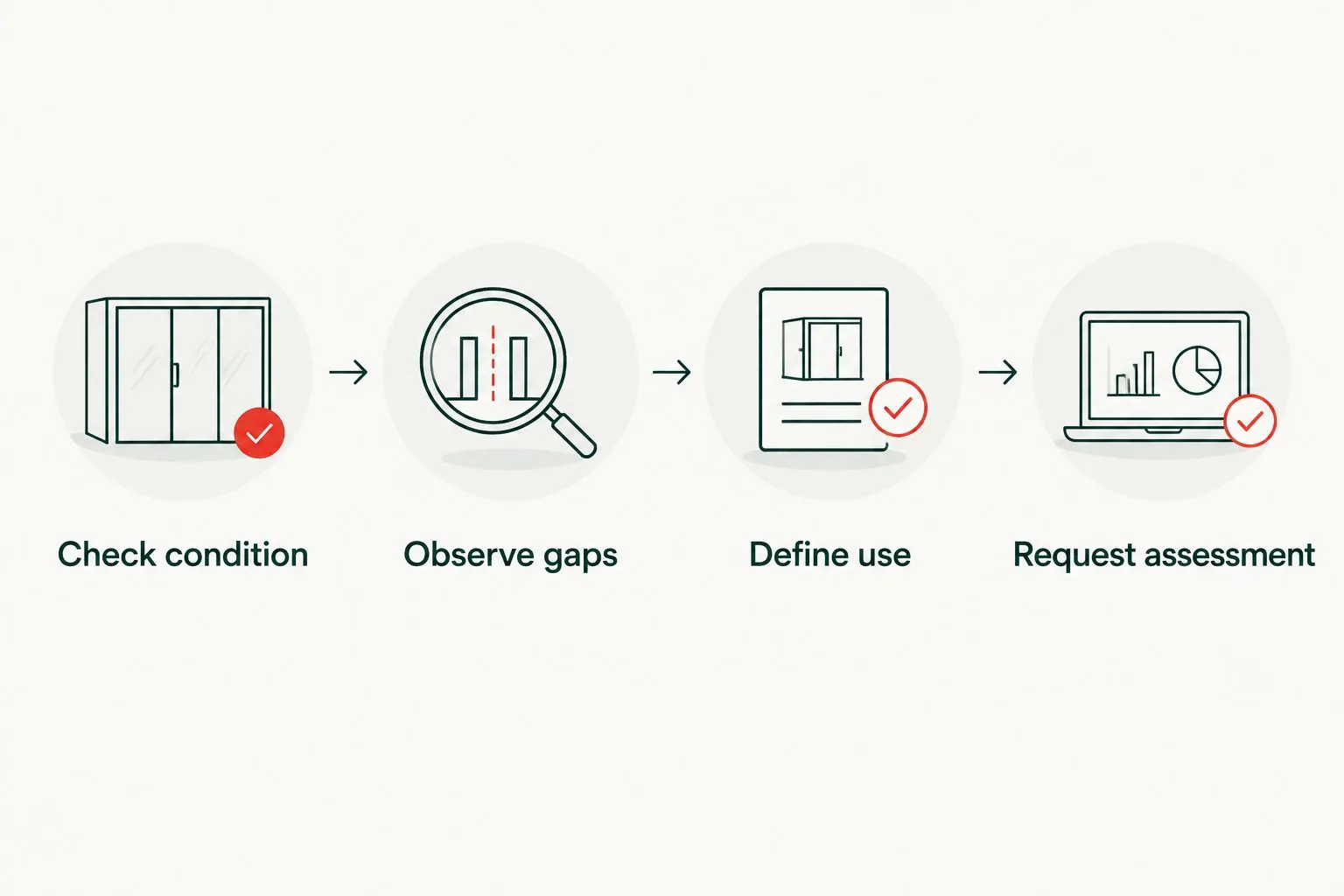
Identify the door’s condition and the garage’s use before choosing the upgrade.
Do not run a damaged door merely to demonstrate the fault. If a cable hangs loose, a spring is visibly broken, a section is displaced or the door sits crooked, keep people and vehicles away from its path. Leave high-tension and structural repairs to a garage door professional.
What should you ask before approving the work?
A useful proposal explains why the recommended option fits your door. Ask whether the existing sections are suitable for insulation, what attachment method is specified and how added weight will be assessed. For seal work, ask whether the problem is worn material, door fit or another fault.
For replacement, request current manufacturer documentation for the proposed door. Confirm whether a stated thermal rating applies to insulation material, a section or the complete door assembly. Compare ratings that describe the same thing.
R-value describes resistance to heat flow; a higher value indicates greater resistance within the stated measurement. It does not describe every air gap or guarantee a particular garage temperature. A whole-door assessment therefore needs more than a single material rating.
Also confirm opening dimensions, headroom, backroom and any restrictions that affect installation. If your property has exterior-change approval requirements, resolve those before ordering a different door appearance. Those checks belong in the decision, not after the door arrives.
Will insulating the door make the garage warm?
Insulating the door alone will not make an unheated garage reliably warm. Insulation slows heat transfer; it does not generate heat. Air leakage and heat flow through the rest of the enclosure still affect conditions inside.
If you want to use the garage as a regularly occupied workspace, assess the full enclosure and any heating or ventilation needs. Do not treat a door upgrade as approval to convert the garage into living space.
Can you keep the opener when replacing the door?
Keeping the opener depends on its condition and compatibility with the replacement door. Ask the installer to assess the connection, operating requirements and safety functions rather than assuming the existing opener is suitable.
An opener is not a remedy for an improperly balanced door. Do not approve a plan that relies on raising force settings to move a door that binds or operates incorrectly.
Frequently Asked Questions
Should I insulate my garage door or replace it?
Insulate a sound door when a compatible upgrade meets your needs; consider replacement when damage or unsuitable construction prevents that result. Have operating faults and air gaps assessed before choosing either option.
Can I add insulation to any garage door?
No, insulation compatibility depends on the door construction and manufacturer instructions. The attachment method, moving-part clearance and added weight all need assessment.
Will garage door insulation stop drafts?
Panel insulation does not close gaps around the garage door opening. Worn seals and fit problems need separate assessment and repair.
Is an insulated replacement always better than upgrading my existing door?
An insulated replacement is not automatically the right choice for a sound existing door. Compare the current door’s condition, compatible upgrade options and the performance you need.
Can I adjust the springs after adding insulation?
Leave spring adjustments to a garage door professional. Added insulation changes door weight, and high-tension components require professional assessment and work.
What should I prepare before a garage door assessment?
Provide photos taken from a safe position, a description of operating problems and an explanation of how you use the garage. Do not operate a damaged door to record its movement.
Will an insulated garage door keep my garage at a set temperature?
An insulated door does not maintain a set temperature by itself. Heating, air leakage, ventilation and the rest of the garage enclosure also affect indoor conditions.
One Last Thing Before You Decide
Before approving an insulation upgrade, ask one final question: How will safe door operation be confirmed after the work? The answer should address the changed weight, clearances and any required professional adjustments—not just whether the insulation stays attached.
A door that looks better insulated but operates poorly is not an improvement. Keep the existing door when it can meet your needs safely; replace it when the assessment gives you a specific reason.