Out of balance
The door drifts, feels heavy, or slams even though it sits level.
- Likely cause
- Springs have lost tension or do not match the door’s weight.
- Repair
- Set spring tension, or replace springs that can no longer hold.
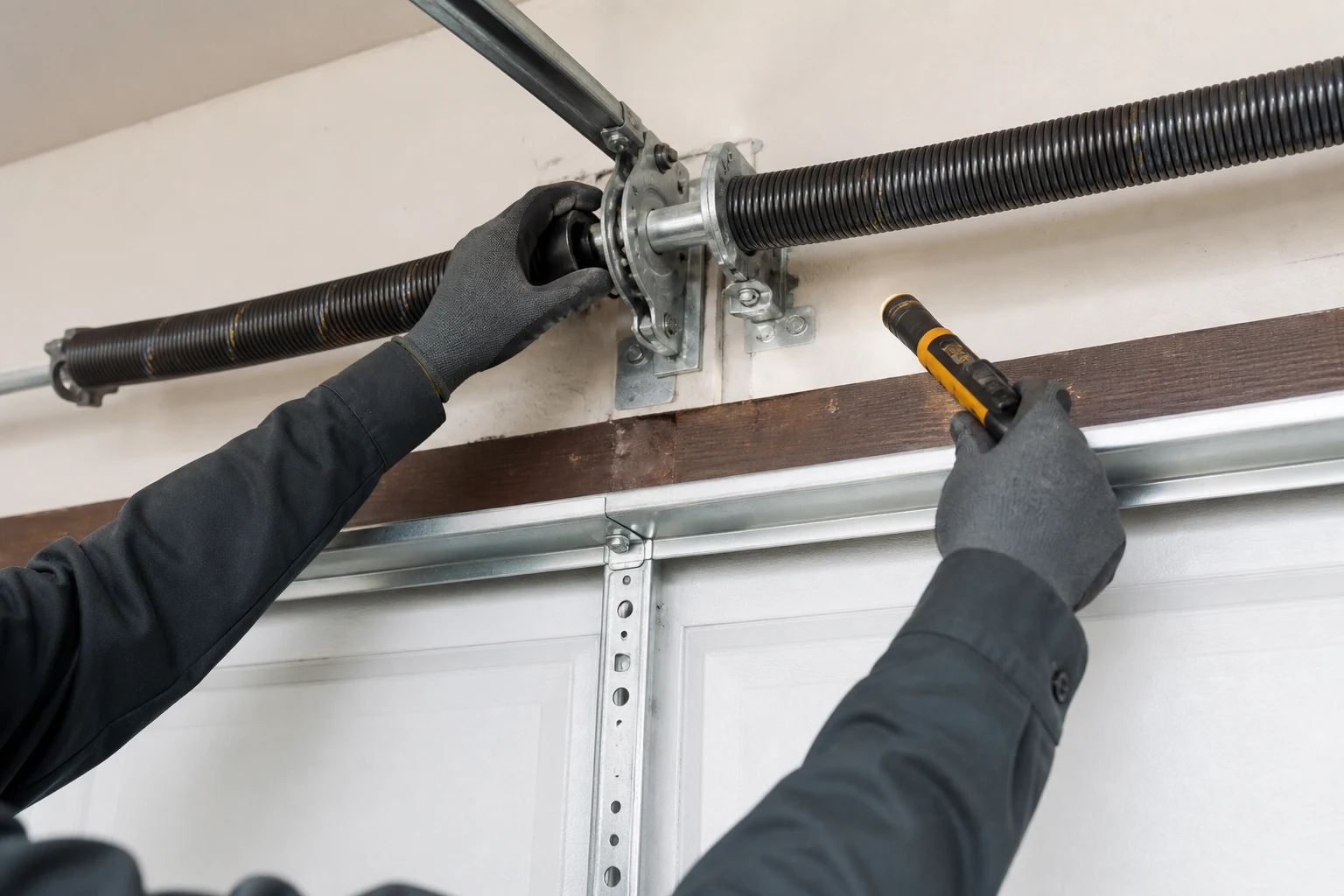
On Rossford Avenue or near Highland Hills Park, an older Fort Thomas door that has gained insulation needs a garage door balance adjustment to match. We rewind the springs for the heavier door so it holds halfway on its own.
We adjust garage door balance in Fort Thomas for older doors that have gained insulation.




Safety check
What to do now
Run the halfway balance test with the opener disconnected. If the door drifts, sinks, or feels heavy, reconnect the opener and keep cycles to a minimum until it is adjusted. Do not raise the opener’s force setting to compensate, do not touch the springs or cables, and do not use a door that is crooked or will not hold.
Customer reviews
Know the difference
The door drifts, feels heavy, or slams even though it sits level.
The door looks crooked or shifts sideways while moving.
Force and travel settings are meant to be calibrated to a balanced door. Turning the force up so a heavy door will close hides the problem, wears the opener out early, and can stop the door from reversing on a person, a pet, or a car. We set force last, after the balance is right.Force is calibrated only after the door is balanced. Turning it up can damage the opener and weaken safety reversal.
Not sure which you have? Send a wide photo of the door from the floor, open and closed if it is safe to operate. Crooked usually means alignment; square-but-heavy usually means balance. We confirm on site.
Before any tension is set
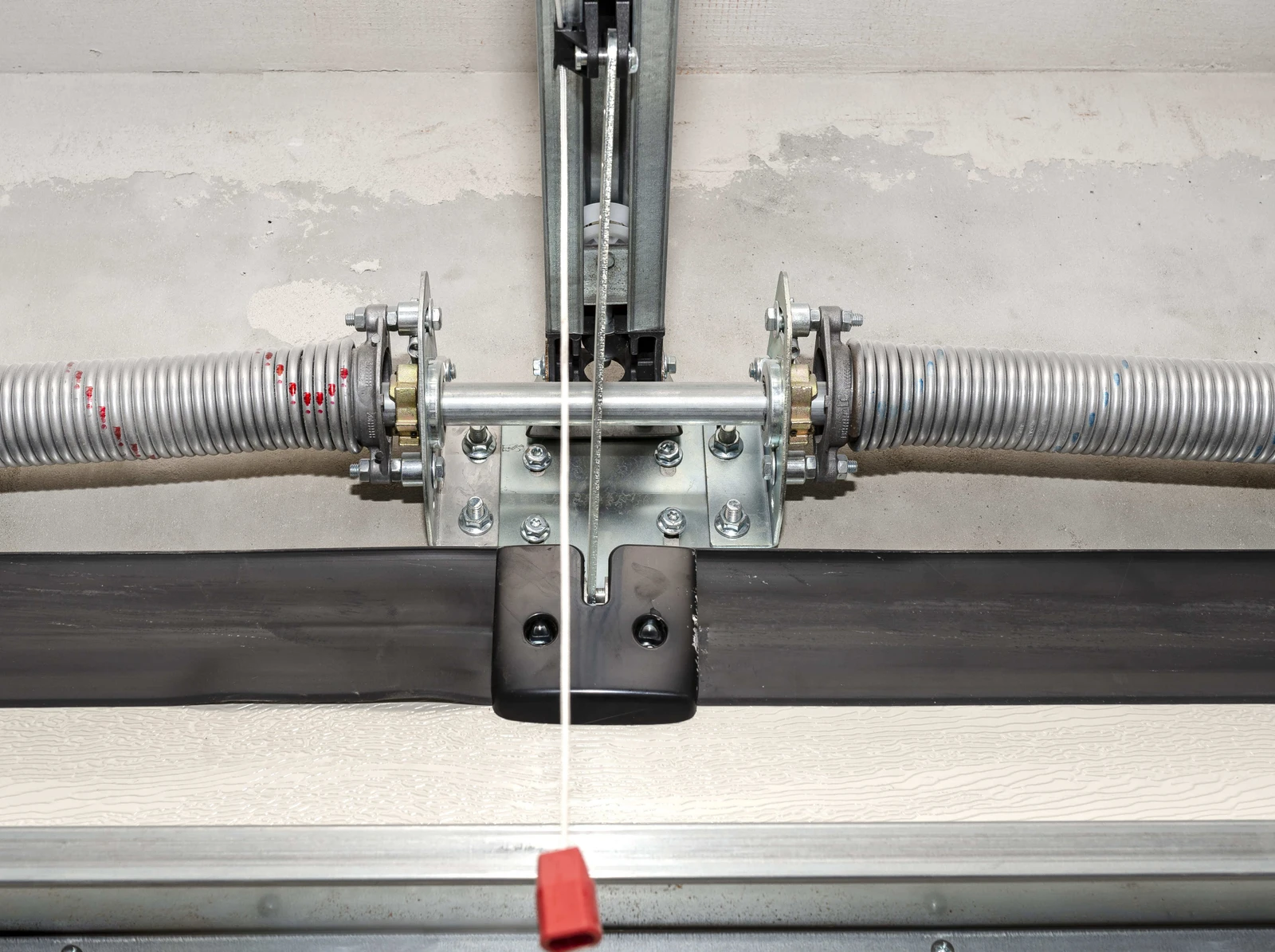
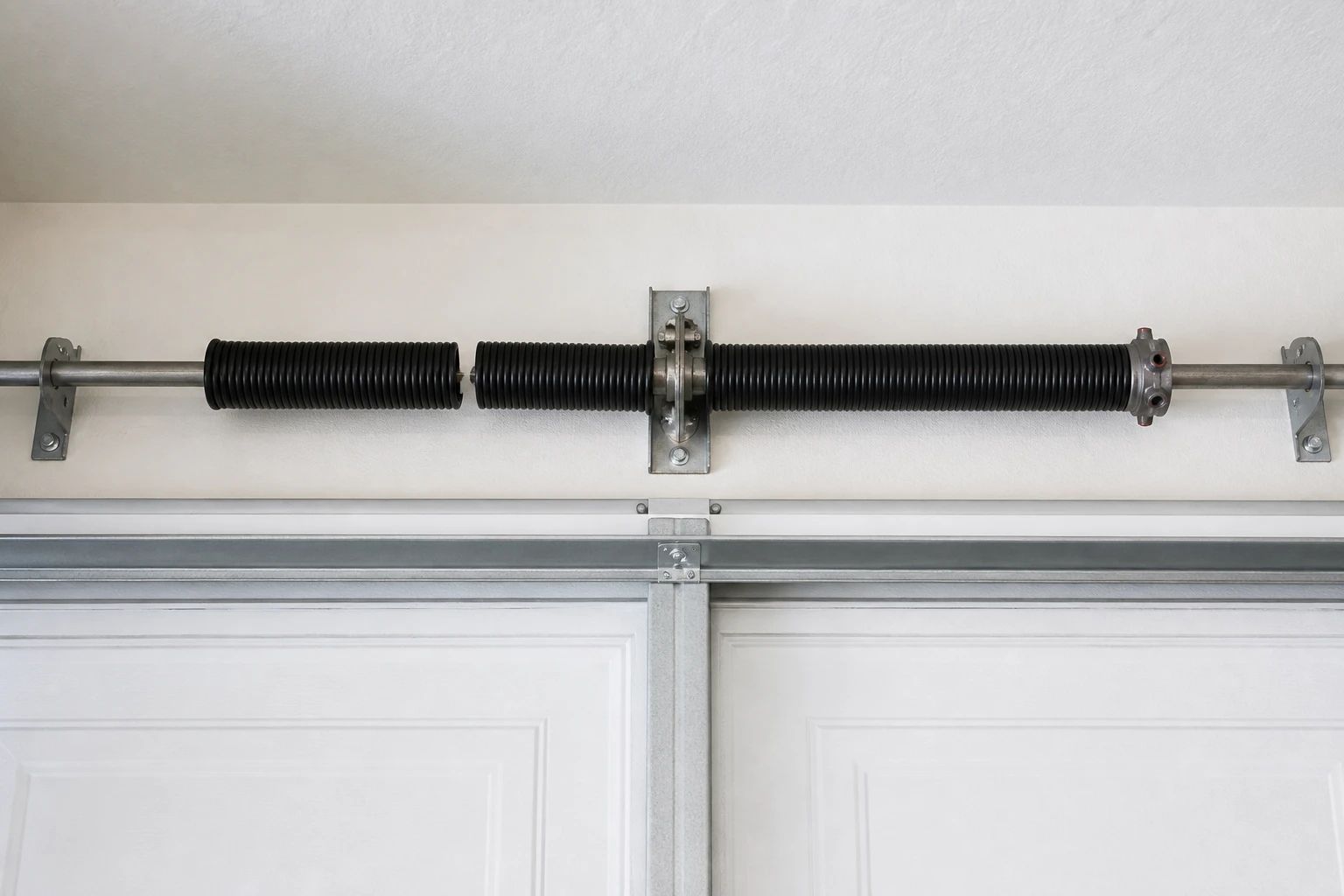
We weigh the door at the floor and test it at three positions. Worn, undersized, mismatched, or over-wound springs are the usual cause of drift and heaviness. Sometimes the honest answer is replacement, not adjustment.Can the springs still hold the door?
Uneven cable tension, a cable off its drum groove, a slipped set screw, or a worn end bearing makes a door crooked or heavy on one side. These are corrected before tension is set so the door rises level.Fixed before any tension is set.
A seized roller, stiff hinge, or rubbing track can make a correctly balanced door behave as if it is heavy. We remove the drag first so the springs are tuned to the actual door, not to friction.Drag removed so springs fit the door.
Once the door is balanced, the opener’s force and travel limits are set so it closes fully and reverses on contact, the photo-eyes are aligned, and the auto-reverse is tested with a 1½-inch board.Opener and photo-eyes set last.
When adjustment is not the honest answer: springs near the end of their cycle life can be re-tensioned and will drift again within months. If the weight test and spring condition say replacement, we quote it plainly and let you choose, rather than selling an adjustment that will not hold.
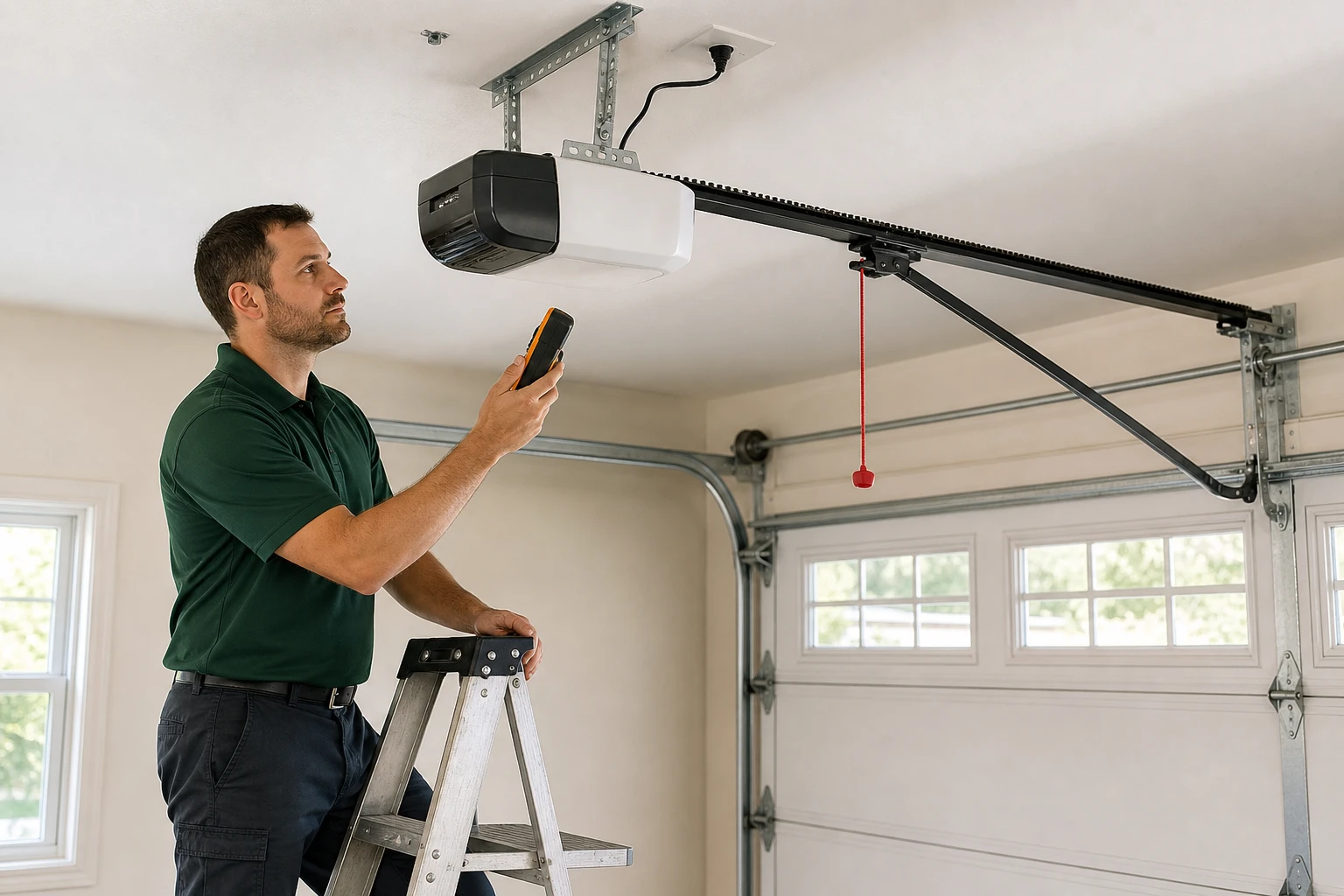 Calibrate · Opener force and travel
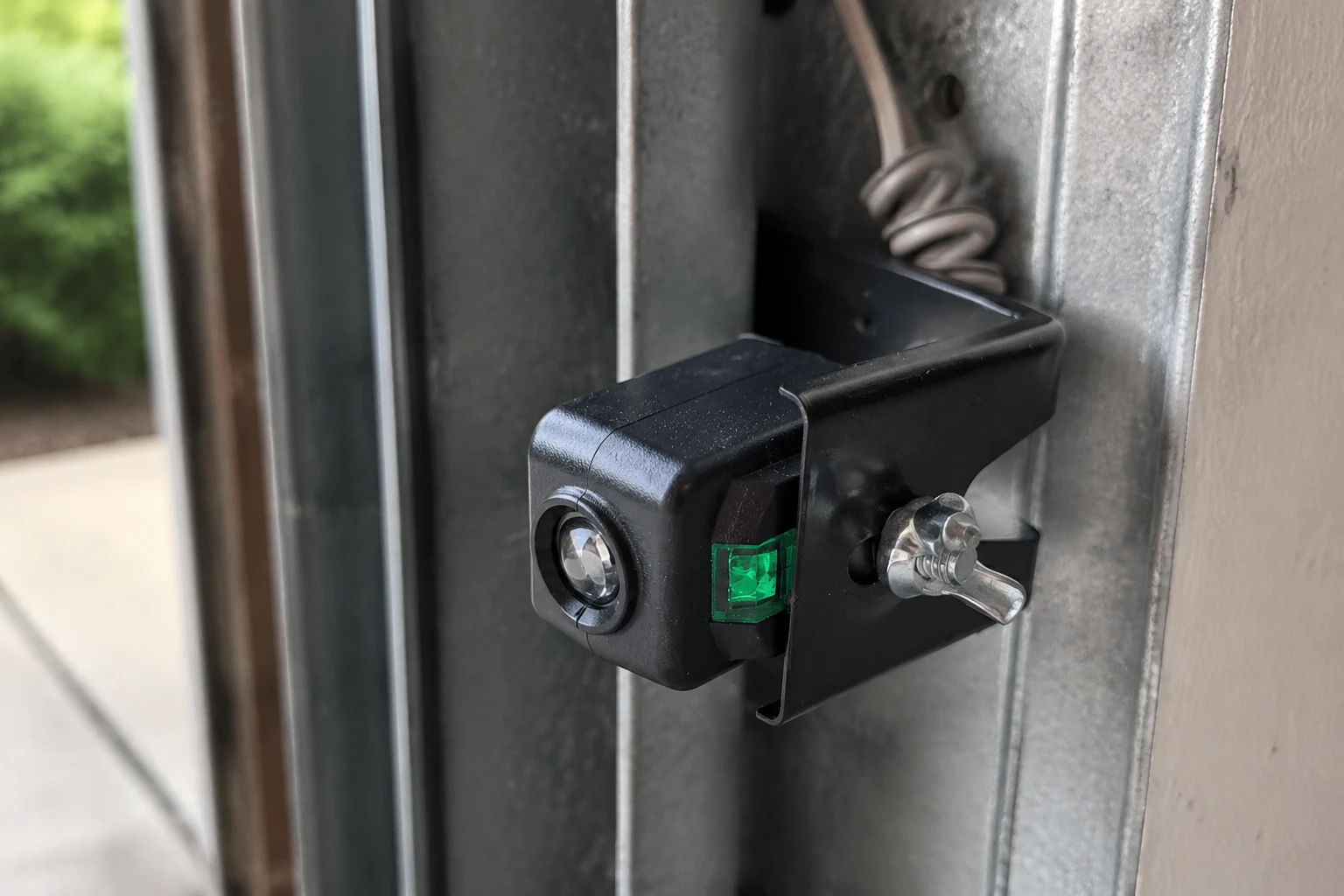 Verify · Photo-eyes and auto-reverse
Service and pricing
The technician disconnects the opener, secures the door, and runs the balance test at three positions and the weight test at the floor before touching a spring.Door secured, balance tested.
Cables, drums, bearings, rollers, hinges, and track are checked so tension is not set against a slipped cable or a dragging roller.Cables, drums and drag checked.
Torsion or extension springs are adjusted with the correct bars and the door secured. If the springs cannot hold a door their size, you get a clear replacement quote instead.Tension set, or a spring quote.
Opener force and travel are set to the balanced door, photo-eyes are aligned, the auto-reverse is tested against a 1½-inch board, and the door is cycled before handoff.Opener set, auto-reverse verified.
Much of Fort Thomas was built generations ago, on the bluff above the Ohio River and Cincinnati. Near Highland Hills Park or on Rossford Avenue, an older door may since have gained insulation or a new section. Each addition changes the load its springs were set to carry. Springs set for the door as it once was can no longer hold it steady.
A balanced door stays put when you lift it halfway by hand and let go. If it drops or rises, the springs no longer match the door. The opener then carries lifting it was never meant to handle, and it wears out early. We reset or replace the springs to match the door as it is today. Cables and drums get checked too, since they share the load. A balanced door lifts easily and closes gently. On a two-spring door, we explain whether both should be replaced together.
Service area coverage
Local ZIP: 41075
Before you schedule
A balance test with spring re-tensioning typically runs $125–$225, and opener force and travel-limit calibration with the photo-eye and auto-reverse tests $85–$150, often done in the same visit. If the door is crooked and a cable or drum has to be reseated or replaced, plan on $125 to $250. When the springs have lost too much tension to hold the door at all, adjustment is not the honest fix; spring replacement typically runs $275 to $750 and is quoted on site.
Yes. It is the one test every homeowner should run monthly. Close the door, pull the red emergency release to disconnect the opener, lift the door by hand to about halfway, and let go carefully. A balanced door stays put. If it drifts up, sinks, or feels heavy, reconnect the opener, stop using the door more than necessary, and call for an adjustment. Never try to change spring tension yourself.
An opener is designed to move a door that weighs only a few pounds in the hand; the springs carry the rest. When the springs weaken, the opener lifts real weight every cycle, its gears and motor wear early, the door can slam or drop, and the safety reversal becomes less reliable. Balance problems rarely announce themselves; they show up later as an opener bill or a broken spring.
No. Torsion springs store enough energy to lift a door of 150–300 pounds, and extension springs stretch under that same load. Adjusting either without the correct bars, the door secured, and training has caused serious hand, arm, and head injuries. Homeowners can test balance; technicians set tension.
Balance is whether the springs carry the door’s weight evenly so it holds still at any height. Alignment is whether the door travels level in the tracks. A door that feels heavy but sits square is a balance problem; a door that is higher on one side or crooked is an alignment problem, usually a cable, drum, or bearing, and forcing it can pull it farther out.
Travel limits tell the opener where fully open and fully closed are, so the door seals at the floor without straining against it. Force sets how hard the opener pushes before it decides something is wrong and reverses. They are set to a balanced door. Raising force to make a heavy door close is dangerous: the door can then fail to reverse on a person, a pet, or a bumper.
Two ways, both monthly. First, with the door closing, wave an object through the photo-eye beam near the floor. The door should reverse immediately. Second, lay a 1½-inch board flat on the floor in the door’s path and close it; the door must reverse when it touches the board. If either test fails, stop using the opener and have the balance and force checked.
Sometimes, briefly. On a two-spring door the pair shares the same age and cycle count, so when one has lost tension the other is usually close behind. We can adjust what is adjustable, but we will tell you honestly when a matched replacement is the better value than re-tensioning springs near the end of their life.
Springs lose tension gradually through normal cycles. Beyond that: springs undersized or mismatched for the door, weight added to the door (insulation, glass, a new section) without re-springing, uneven cable tension, worn bearings, or earlier work that set tension by feel rather than by the door’s weight.
A homeowner balance test monthly takes a minute. A professional balance check, with the weight test and opener calibration, belongs in every annual tune-up, and sooner if the door starts to feel heavy, slam, or hesitate.
A door that drifts down or creeps up when released halfway, feels heavy to lift by hand, closes hard or sits crooked is out of balance. An opener that strains, slows or stops partway is another sign. Most of the time the springs have lost tension and need resetting or replacing.
Local help for a heavy, dropping, or slamming door
Let us know whether the door drifts, drops, feels heavy, slams, sits crooked, or fails to reverse, whether it still opens and closes, and whether a vehicle is trapped. Keep clear of the opening if the door will not hold.