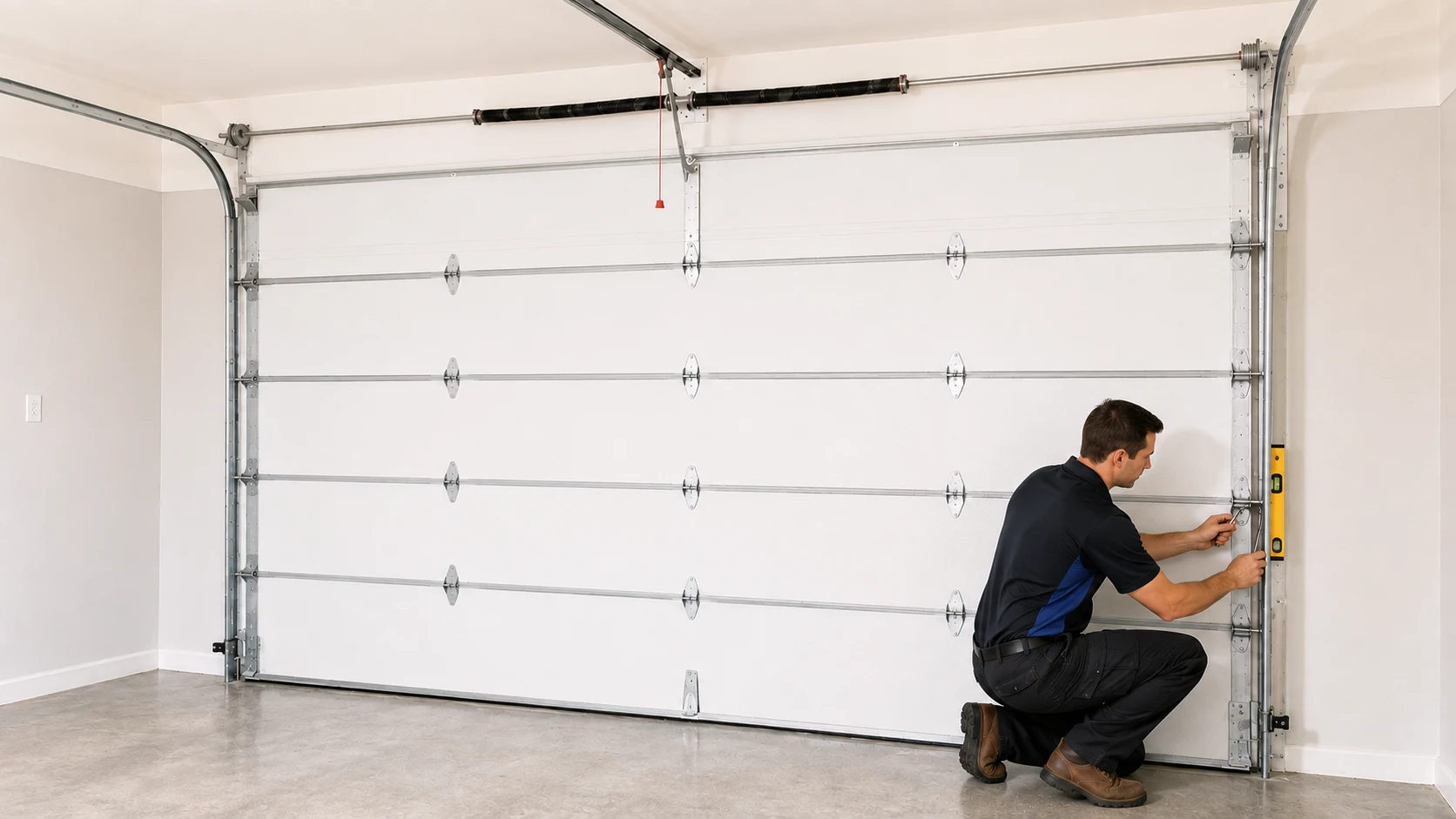
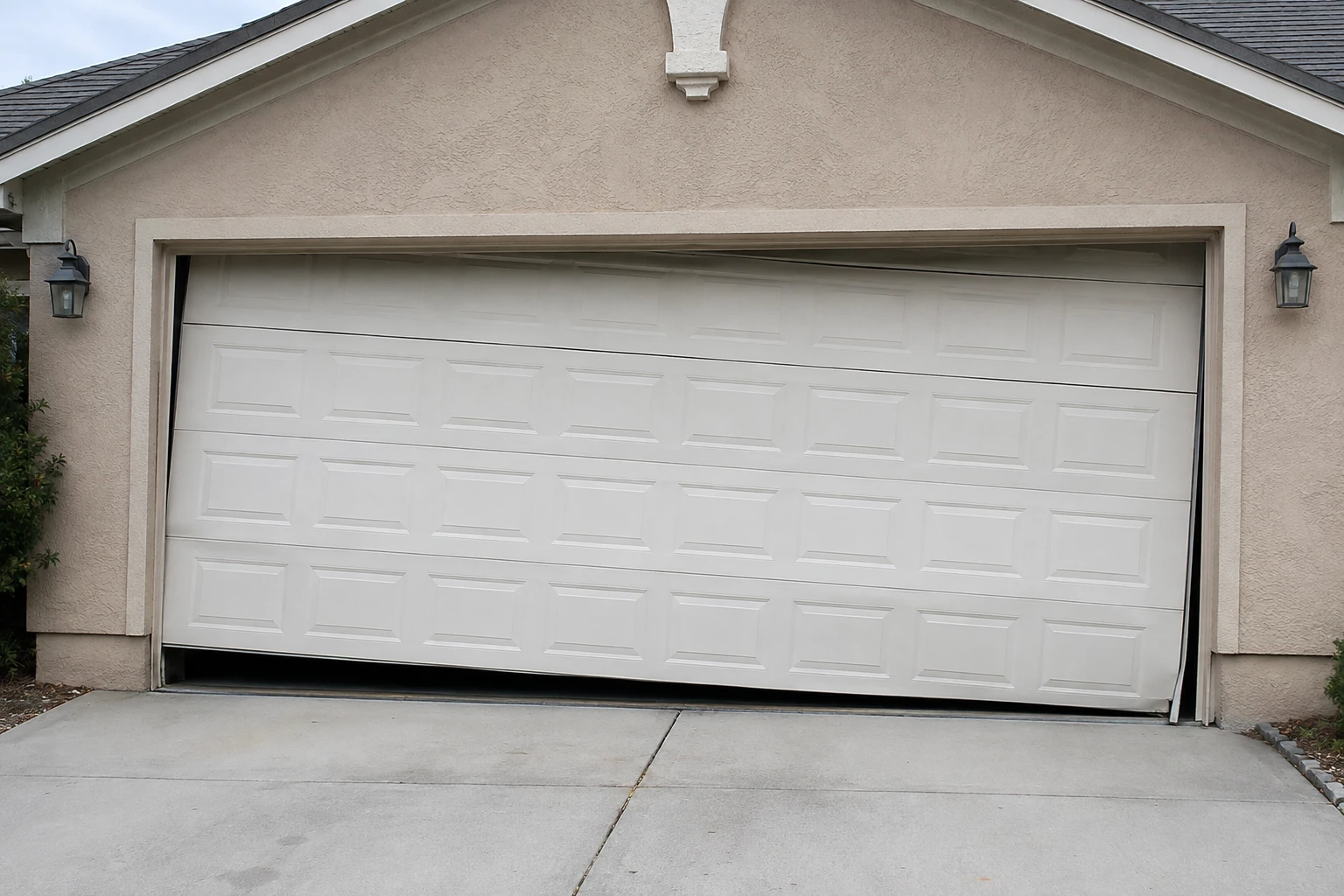
Your garage door rides on two connected metal tracks. One runs up each side of the opening. The other turns and runs back along the ceiling.
1 Beside the door
Vertical track
The two straight rails you see on the left and right sides of the door.
- What it does
- Keeps the rollers lined up while the door closes and starts to open.
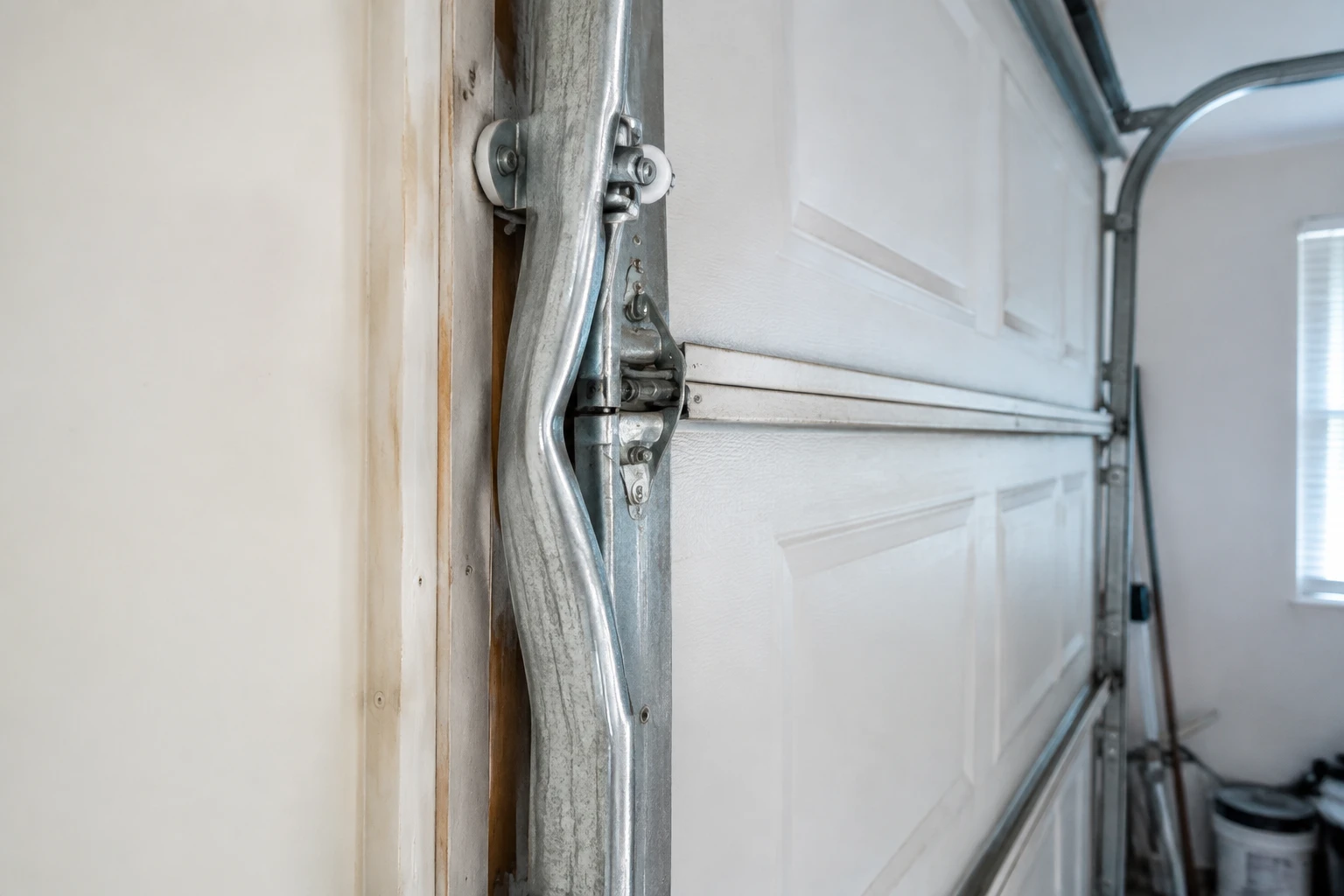
- Look for
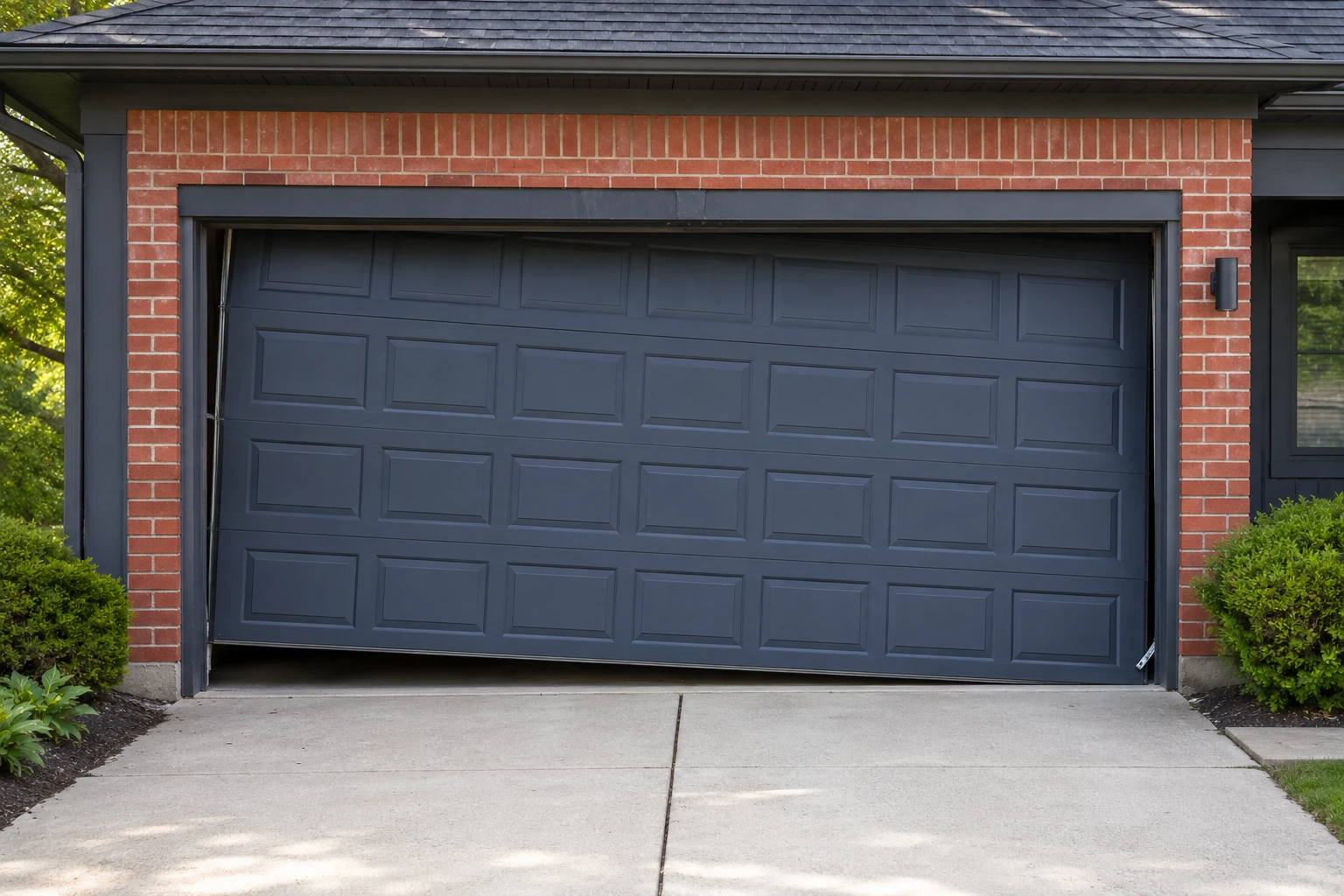
- Dents, rust, loose wall brackets, uneven gaps, or a roller outside the track.
2 Above the door
Curved and overhead track
The rail that curves above the opening, then continues toward the back of the garage.
- What it does
- Guides the door through the turn and holds it overhead when open.
- Look for
- Rubbing, a bent curve, sagging rail, or loose ceiling supports.
Not the opener rail: the opener rail runs down the center of the ceiling. Door tracks run along both sides of the door.
Beside the openingVertical track
At the radius and ceilingCurved and horizontal track
Where it sits Runs beside the opening from the floor to the curved radius Transitions above the opening and continues toward the rear hangers
What it does Guides the rollers while the door is closed and begins to rise Guides each section through the turn and into the overhead position
Common trouble Impact bends, loose jamb brackets, rust, incorrect spacing, or roller escape Bent radius, sagging track, loose flag angles or rear hangers, and rubbing
Replacement detail Profile, gauge, spacing, height, and connection at the radius must match Radius, length, lift type, supports, and connected hardware must match
Track geometry changes with the lift system.
Standard-lift, low-headroom, high-lift, and vertical-lift systems use different track geometry. Replacement sections must match the door, lift system, radius, gauge, and mounting layout.
Track is not the opener rail. Door tracks guide the rollers on both sides. The opener rail is the separate center rail connected to the motor and trolley.