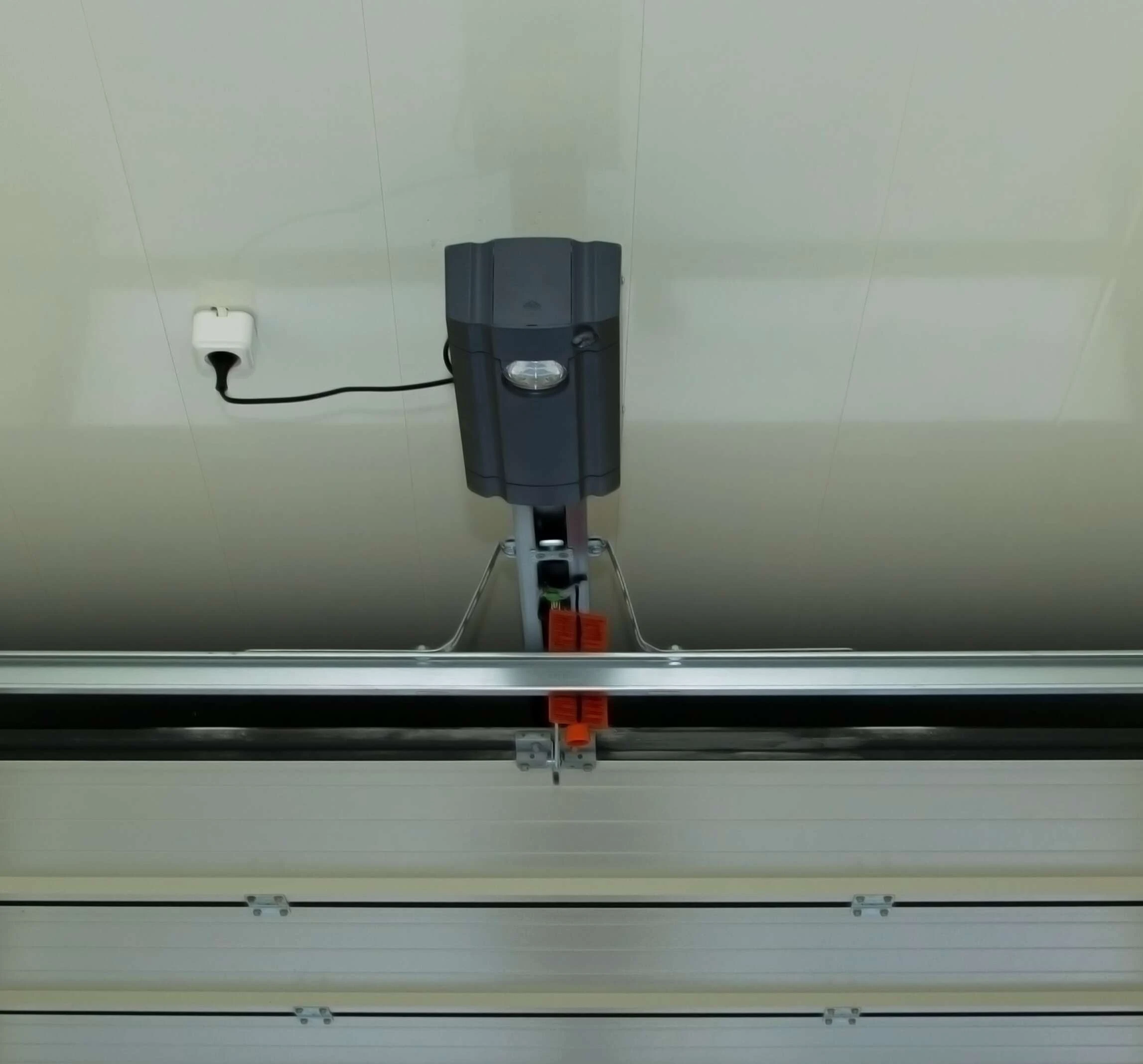
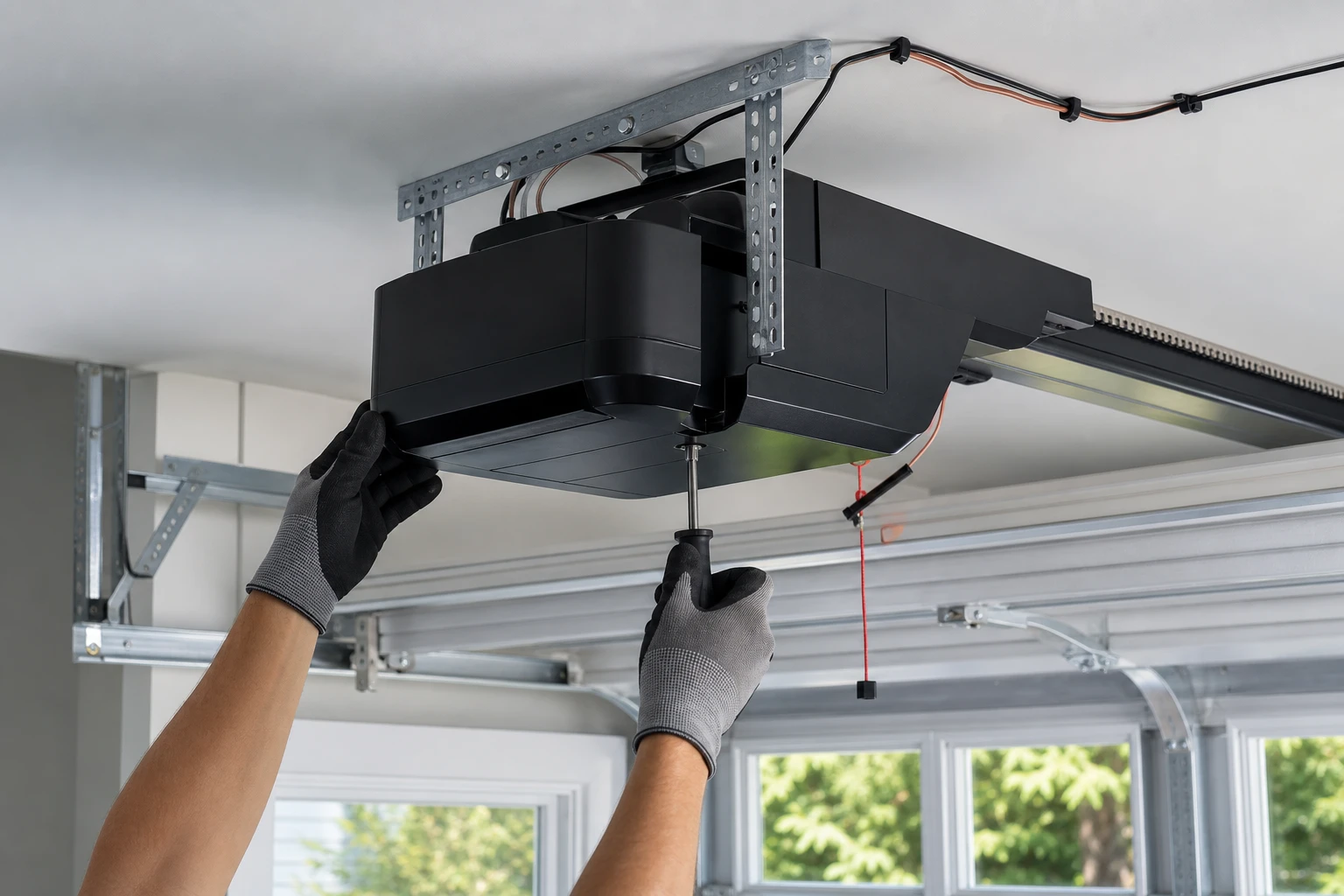
Garage door technician diagnosing an older ceiling-mounted opener

Screw-Drive Opener Repair, Parts & Replacement Guidance in Clifton, KY

Near Vernon Avenue, where Clifton's houses are almost all Victorian, screw-drive garage door opener repair usually involves an older garage. With fewer moving parts than a chain drive, the opener mostly needs a clean rod and a sound trolley.

Older Clifton screw drives mostly need a clean rod and trolley.

Get Your Free Legacy Screw-Drive Opener Quote

Repair, replacement, or fit consultation • No-obligation quote

Step 1 of 2
Required field
Required field
Required field

At a glance

Is Legacy Screw-Drive the Right Fit?

Older system, still serviceable
Drive arrangement
Threaded rail or screwA carriage follows a rotating screw or model-specific rack.
Current brand status
Older designLiftMaster and Chamberlain now focus on belt, chain and wall mount.
First service step
Identify exact modelThe model number and manufacture date control parts research.
Repair potential
Often component specificCarriage, coupler, sensors, controls, or supported electronics may be repairable.
Replacement trigger
Safety and supportObsolete critical parts or missing protection change the decision.
Upgrade paths
Belt, chain, qualified wall mountThe garage and door determine the right current alternative.

Understand the complete system

How Legacy Screw-Drive Opener Works

A conventional screw-drive opener uses a rotating threaded rail or screw mechanism to move the carriage and door arm.

Some homeowners use “screw drive” for any opener with a solid rail, so identifying the brand, model, rail, carriage, and drive mechanism comes before ordering parts.

LiftMaster and Chamberlain no longer offer a new residential screw-drive line. Derby Strong services existing screw-drive openers and helps you decide whether to keep, repair or replace yours.

Legacy ceiling-mounted opener and rail above a sectional garage door
System viewModel-specific support for older threaded-rail systems and clear upgrade options.
  1. 01

    Threaded rail and carriage

    The motor turns a model-specific screw, rack, or coupling that moves the carriage. Rail wear, carriage wear, contamination, alignment, and the exact approved lubricant affect travel.

    The motor turns a screw or rack that moves the carriage.

  2. 02

    Motor, coupler, limits, and controls

    Older units may use mechanical or electronic limits, RPM sensors, couplers, gears, capacitors, boards, remotes, wall controls, and photo eyes that vary significantly by model.

    Limits, sensors, boards and controls vary widely by model.

  3. 03

    Identify before repairing

    The label, model, manufacture date, learn-button color, rail, sensor generation, and existing accessories determine whether a listed part actually fits.

    The label, model and date decide which parts actually fit.

Choose around the door and the garage

Is This Opener Right for Your Garage?

Strong fit when

  • Existing post-1992 screw-drive systems with modern photo eyes, safe reversal, a sound rail, smooth door movement, and an isolated supported failure.Post-1992 systems with photo eyes and one isolated failure.
  • Homeowners who are satisfied with the current noise, speed, controls, and features and want to avoid unnecessary replacement.Owners happy with the current noise, speed and features.
  • Systems where the exact carriage, coupler, sensor, remote, control, or other failed component remains available and the rest of the opener is sound.Systems where the failed part is still available.

Choose another path when

  • The opener predates modern photo-eye protection or required safety behavior cannot be restored correctly.It predates photo eyes or safety can’t be restored.
  • The exact rail, rack, screw, carriage, motor, or control board is discontinued or several major assemblies are failing.Key parts are discontinued or major assemblies are failing.
  • Recurring repairs, extensive drive wear, or poor door compatibility makes another major repair a weak long-term value.Repeat repairs make another major repair poor value.
  • The household now needs quieter operation, battery backup, modern smart access, better lighting, current remotes, or easier parts support.You want quieter operation, battery backup or smart access.

Screw-drive service guide

Explore Service Details

Garage and door compatibility

What We Check First on Every Visit

Age provides context, but it is not the only decision. A safe, supported older opener with one isolated failure can be worth repairing. A younger system can still be a poor repair if critical parts are obsolete or major failures overlap.

01

Brand, model, and date

A clear photo of the opener label, rail, carriage, controls, sensors, and learn button helps confirm the exact family before a service visit.

A photo of the label and rail confirms the opener family.

02

Modern safety protection

Photo eyes near the floor and verified contact reversal are essential. Chamberlain advises replacement of pre-1993 systems that lack modern entrapment protection.

Photo eyes and verified reversal are essential.

03

Rail and drive condition

The threaded mechanism, rack, carriage, coupler, rail joints, trolley, and motor connection must remain structurally serviceable.

The drive, carriage and rail must be structurally sound.

04

Door balance and travel

The disconnected door should move smoothly and remain reasonably stable. A broken spring, cable problem, track bind, or heavy door is repaired before opener work.

The door must move smoothly; door repairs come first.

05

Parts and accessory support

The exact part number, replacement status, remote and keypad protocol, sensor compatibility, and board availability are confirmed before promising a repair.

Part availability is confirmed before we promise a repair.

06

Value of a current system

Belt, chain, and qualifying wall-mount options are compared when a quieter drive, battery, lighting, myQ, camera, or current accessory support matters.

Belt, chain and wall-mount options are compared if needed.
Compatibility notes

Parts are matched to the exact model.

  • Do not assume every solid-rail opener is screw drive or that one brand’s carriage fits another rail.Not every solid-rail opener is a screw drive.
  • Lubrication requirements differ; the exact owner or service manual controls the product and procedure.Lubrication follows the exact model’s manual.
  • A discontinued LiftMaster screw-drive rail kit may have no direct replacement, so the exact part status must be checked.Some discontinued rail kits have no direct replacement.
  • Legacy remotes, keypads, vehicle controls, safety sensors, and smart-control add-ons are not universally cross-compatible.Legacy remotes and sensors are not cross-compatible.
  • Springs, cables, bottom fixtures, and related brackets remain high-tension technician work regardless of opener age.Springs and cables remain technician work at any age.

Compare the tradeoffs

Compare Opener Types

ComparisonLegacy Screw-Drive OpenerOther system
Versus current belt driveKeeping a supported unit can avoid unnecessary replacement.Belt offers current quiet-operation, battery, camera, lighting, smart, and accessory choices.
Versus current chain driveAn isolated repair may preserve a system that still meets the garage needs.Chain offers current service platforms and value-focused new-system choices.
Versus wall mountUses the existing center-ceiling drive and does not require wall-mount qualification.Wall mount clears the ceiling only when the torsion system and geometry qualify.

Representative manufacturer resources

Official Legacy Support and Parts References

The useful question is not “Which new screw-drive model should I buy?” It is “What exact system is installed, does it still meet modern safety needs, and does the correct supported part exist?”

LiftMaster garage door opener brand logo

We primarily install and service LiftMaster and Chamberlain. LiftMaster is the professional line; Chamberlain is the retail line. We also support other major brands when compatible parts are available.

LiftMasterLegacy reference

Discontinued model reference

3240

An official LiftMaster support page for a discontinued residential screw-drive opener. It illustrates why model-specific manuals and replacement-part status matter.

  • Legacy screw-drive reference
  • Official manuals and support context
  • Shown for reference, not sold as a new opener
View official specifications
LiftMasterParts resource

Official LiftMaster parts hub

Parts support

Use the exact model and part number to verify whether a supported replacement remains available before authorizing a legacy repair.

  • Model-specific parts research
  • Manual and accessory support
  • Availability must be confirmed
View official specifications
ChamberlainParts resource

Official Chamberlain parts hub

Parts support

A manufacturer resource for identifying compatible opener parts and current replacement status on supported Chamberlain systems.

  • Model and part lookup
  • Accessory and repair research
  • Exact compatibility required
View official specifications

Legacy part status can change and some discontinued components have no replacement. Derby Strong confirms the exact model and part before promising a repair. Official links are references, not a stock or manufacturer-authorization claim.

Model-specific diagnosis for carriages, couplers, rails, drive parts, limits, sensors, controls, remotes, and supported electronics.

Model-specific diagnosis of the drive, sensors and controls.

Safety review focused on photo-eye protection, contact reversal, manual release, and a mechanically healthy door.

Safety review of photo eyes, reversal and manual release.

Parts research before repair approval so a similar-looking component is not mistaken for a compatible one.

Parts are researched before a repair is approved.

Clear upgrade comparison to current belt, chain, or qualified wall-mount systems when replacement creates stronger value.

A clear comparison with current replacement systems.

Selection and upgrade notes

  • A current belt drive is the usual quiet replacement path for attached garages and nearby living space.A belt drive is the usual quiet replacement.
  • A current chain drive remains a durable, value-focused replacement path for many conventional garages.A chain drive is a durable, value-focused replacement.
  • A wall-mount system is considered only after the torsion shaft, drums, track, clearance, weight, and balance qualify.A wall mount is considered only when the door qualifies.

Repair starts with diagnosis

Common Problems We Diagnose

Similar symptoms can come from the opener or the door. We find the actual fault before recommending parts.

01

Worn carriage or drive interface

The motor may run while the carriage slips, chatters, stalls, or fails to move correctly along the screw or model-specific rack.

The motor runs but the carriage slips or stalls.

02

Coupler, gear, or motor connection

A damaged coupler or internal drive part can interrupt motion even when the motor makes noise and the controls respond.

A damaged coupler can stop motion while the motor runs.

03

Rail condition and lubrication

Dry, contaminated, damaged, misaligned, or worn drive surfaces can cause jerky travel. Only the exact manufacturer procedure and approved product should be used.

Worn or dry drive surfaces cause jerky travel.

04

Limits, RPM, and controls

Travel limits, RPM sensors, capacitors on supported designs, logic boards, wall controls, remotes, and wiring can create stop, reverse, or no-response symptoms.

Limits, boards or wiring can cause stops or no response.

05

Safety sensors and reversal

Misaligned or unsupported photo eyes, damaged wiring, obsolete safety parts, or incorrect settings can prevent safe closing and change the repair decision.

Photo-eye faults can prevent safe closing.

06

Door-system resistance

Broken springs, cable damage, binding rollers, bent tracks, locks, panel problems, or poor balance can overload the opener and mimic a drive failure.

Door problems can overload the opener and mimic failure.

Technician opening a garage door opener housing for diagnosis
Stop cycling the openerwhen the door is crooked, unusually heavy, binding, dropping, off track, or supported by damaged springs or cables.

Common symptoms worth scheduling

  • The motor runs but the carriage chatters, slips, stalls, or does not move.
  • The rail makes new grinding, rattling, scraping, or jerky travel sounds.
  • The door stops, reverses, or repeatedly loses its open or closed position.
  • The remote, keypad, wall control, sensors, or vehicle controls are unreliable.
  • The exact replacement part is hard to identify or is listed as discontinued.
  • The disconnected door is heavy, drops, binds, or is difficult to move smoothly.

Keep it or replace it?

Repair or Replace? How We Help You Decide

Repair is often sensible when

  • The system has modern photo eyes, passes reversal testing, and operates a balanced, mechanically healthy door.It has photo eyes, passes reversal and the door is sound.
  • The failure is isolated and the exact model-specific carriage, coupler, sensor, control, remote, or supported part remains available.The failure is isolated and the exact part is available.
  • The rail, motor, safety system, wiring, and remaining controls are sound.The rail, motor, safety system and wiring are sound.
  • The existing noise, speed, controls, and features still fit the homeowner’s needs.Its noise, speed and features still fit your needs.

Replacement is often stronger when

  • The opener predates modern entrapment protection or compliant safety behavior cannot be restored.It lacks modern safety protection or it can’t be restored.
  • The required rail, rack, screw, carriage, board, motor, or other critical part is obsolete or unavailable.A critical part is obsolete or unavailable.
  • Major rail, drive, motor, and electronics failures overlap or repairs keep recurring.Major failures overlap or repairs keep recurring.
  • Current belt, chain, or compatible wall-mount features provide better long-term access, safety, lighting, battery, noise, and parts support.A current system offers better safety, features and parts.

Do not replace a safe, supported opener only because it is old, and do not keep repairing one whose critical safety or drive parts are unavailable. The model label, physical condition, safety test, door balance, and parts lookup should decide.

Professional service and ownership

What to Expect From Service

Derby Strong starts legacy opener work with identification and parts research rather than promising a universal repair. That protects the homeowner from incompatible components and repeat visits.

We compare the smallest safe repair with a current LiftMaster or Chamberlain replacement, and we service many other major brands when parts for the exact model are still available.

Four service steps

  1. 01

    Identify the exact brand, model, manufacture date, rail, carriage, drive mechanism, sensors, controls, learn-button protocol, and existing accessories.

    Identify the exact model, date, drive and controls.

  2. 02

    Inspect the door balance, springs, cables, rollers, tracks, hinges, reinforcement, rail, drive, motor, power, settings, controls, and safety devices.

    Inspect the door, springs, rail, drive and safety devices.

  3. 03

    Confirm the exact supported part and explain the repair scope, uncertainty, replacement alternatives, and optional features before work.

    Confirm the part and explain scope and alternatives.

  4. 04

    Complete the supported repair or correctly matched replacement, then set travel and force, test safety reversal, program controls, and demonstrate manual release.

    Repair or replace, then test safety and program controls.

Ownership guide

Save the model information

Photograph the opener label, manufacture date, rail, carriage, sensors, learn button, remotes, and wall control before a problem makes the door unusable.

Photograph the label and parts before a problem starts.

Use the correct manual

Lubrication, carriage service, travel settings, and controls differ by model. Generic online instructions can damage unsupported parts or hide a door bind.

Service differs by model; generic advice can cause damage.

Test safety monthly

Keep the photo-eye path clear and test contact reversal. A system without modern photo-eye protection should be evaluated for replacement.

Keep photo eyes clear and test the safety reversal.

Stop when parts become uncertain

Do not substitute a similar-looking rail, carriage, sensor, board, remote, or keypad without exact compatibility confirmation.

Never substitute look-alike parts without confirming fit.

Customer reviews

Kentucky homeowners recommend Derby Strong.

Screw-drive opener repair across Clifton

Clifton's houses near Vernon Avenue and St. Frances of Rome School were built in Victorian styles, like nearly all of the neighborhood. An older garage at one of them may run a screw-drive opener. It has fewer moving parts than other types. The threaded rod and its grease do most of the work.

A motor turns the rod, and a carriage rides along it to move the door. That rod needs its grease to turn smoothly. When the film dries out or picks up grit, the opener labors, rattles or stalls partway. Cleaning the rod and applying new grease brings back smooth travel. We also reset the travel limits. The carriage is checked for wear where it rides the rod, since a worn one slips under load. A balanced door keeps the motor from straining on every trip.

Service area coverage

Local ZIP: 40206

Open in Google Maps

Detailed answers before you schedule

Legacy Screw-Drive Opener Questions

01Can an old screw drive garage door opener still be repaired in Clifton?

Often, yes. If the opener has working photo eyes, the door is balanced and the failed part is still available, a repair is usually sensible. Carriages, couplers, sensors, remotes and controls are common fixes on many models. The exact model number tells us whether the part you need can still be found.

02Are screw drive garage door openers discontinued?

LiftMaster and Chamberlain no longer feature a new residential screw drive model in their catalogs, though other brands may differ. Many existing screw drive openers are still in service, so our focus is repairing them. The brand and model number decide whether parts and manufacturer support are still available.

03How do I know if I have a screw drive opener?

Check the model label on the motor and look along the rail. A screw drive uses a long threaded rod that turns to move the carriage, with no chain or belt in sight. A solid rail alone does not prove the type, so the model label is the most reliable way to identify the opener.

04When should I replace a screw drive opener instead of repairing it?

Replace it when the opener lacks photo eyes or cannot reverse safely, when the rail or another key part is discontinued, or when several major parts are failing. Repeated repairs on an aging unit rarely pay off. A new opener can also bring battery backup, better lighting and app control.

05What lubricant should I use on a screw drive opener?

Use only the product named in your opener manual, because screw drive rails differ by brand and some common advice is wrong for certain models. Too much grease attracts dirt. If the door still struggles after lubrication, the problem is likely the door or a worn carriage, and more force will not fix it.

06Can I add myQ or new remotes to my screw drive opener?

Sometimes. It depends on the model, its age and how its remotes learn new codes. A myQ smart hub works with selected openers made after 1993, but it only adds app control. It does not update old safety equipment or repair worn drive parts.

07Should I replace a screw drive opener with a belt or chain drive?

A belt drive is the usual pick when living space sits near the garage, because it runs quietly. A chain drive is a durable, lower cost choice for many detached or less used garages. A wall mount opener is another option when the door has a qualifying torsion system and you want the ceiling clear.

08Why does my screw drive opener run but the door does not move?

A motor that runs while the door stays put usually means a worn carriage, a stripped coupler or a slipping drive part. A door that is too heavy or binding can cause the same symptom. A technician checks the door’s balance first, then inspects the carriage and coupler to find the failed part.

Local opener help

Tell us what the opener and door are doing.

Share the brand, model, symptoms, and any features you want if replacement is being considered.

Derby Strong provides legacy screw-drive opener diagnosis, model identification, repair, and replacement guidance across Louisville, Lexington, Northern Kentucky, and nearby communities. Parts availability and service scope are confirmed by model.

  • Repair and replacement options
  • LiftMaster and Chamberlain focus
  • Many major brands serviced
Call (502) 619-5198

Request Legacy Screw-Drive Opener Service

Serving Clifton and nearby Louisville Metro communities. Share the essentials and we’ll call to confirm the right service timing.

Step 1 of 2
Required field
Required field
Required field

Derby Strong Garage Doors

Garage door trouble?

Talk to our local team now about a broken spring, a stuck door, an opener or a new door.

Call (502) 619-5198 Schedule online

5.0 from 236 Google reviews