Stamped steel
The carriage pattern is formed into the steel section for a clean, lower-maintenance option.
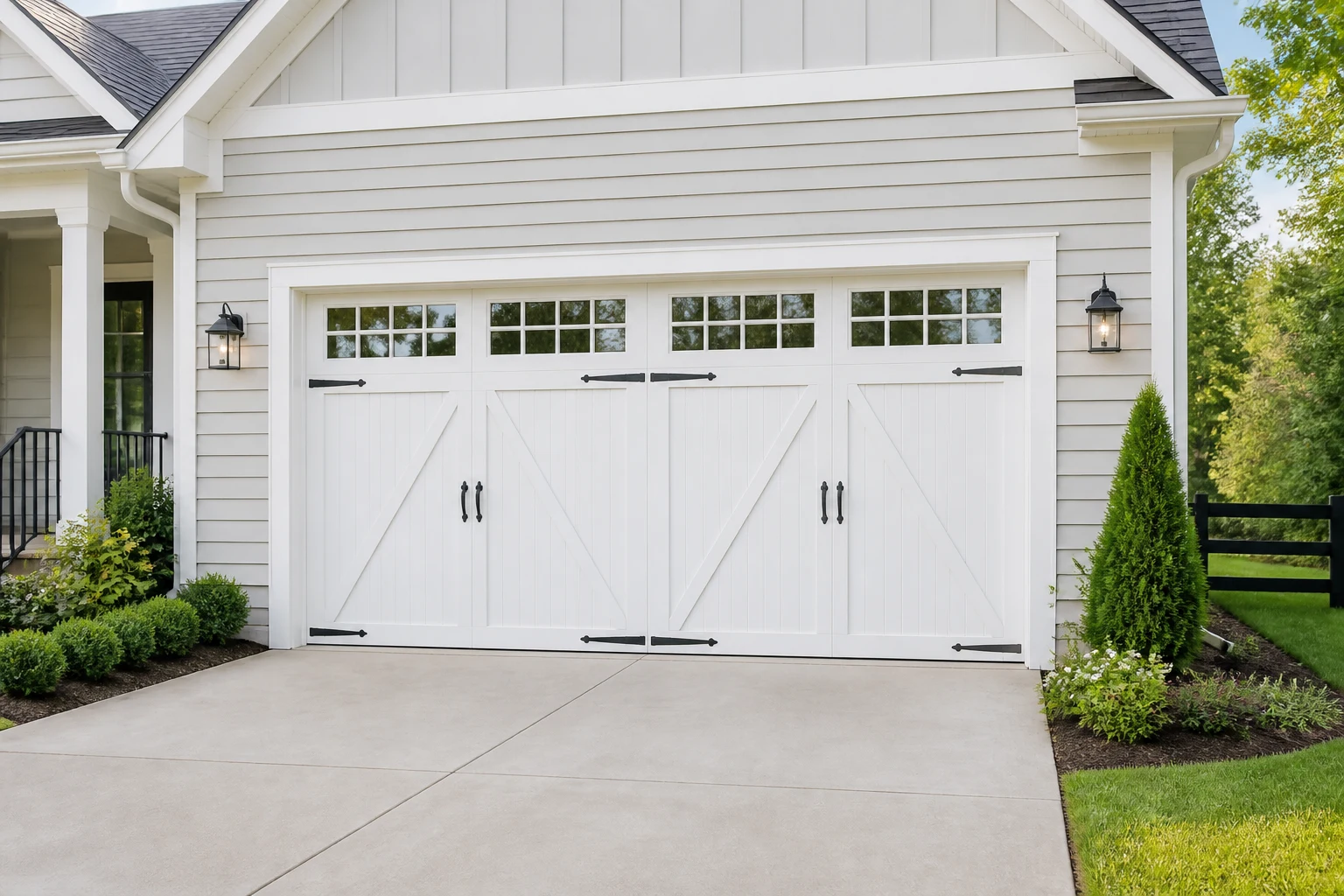
In Jacobs, carriage house garage door installation echoes the Craftsman homes off Taylor Boulevard and the English cottages under mature trees. The board pattern and hardware follow the house rather than a plain ribbed panel.
Carriage house garage doors echo the detail on the Craftsman homes and cottages of Jacobs.




Carriage Doors Explained
A carriage house garage door looks like a pair of old swing-out barn doors, but it opens overhead like any sectional door. Vertical boards, a center line, top windows and decorative handles create the look.
Carriage house describes the appearance, not the construction. Many doors stamp the board pattern into steel. Overlay doors add composite trim over an insulated steel base for deeper shadow lines, and a few collections use real wood.
Overlays, glass and hardware all add weight, so the springs and opener are matched to the finished door. We confirm the layout at your exact opening size before ordering, so the boards and windows line up the way you expect.
Construction and Character
The carriage pattern is formed into the steel section for a clean, lower-maintenance option.
Applied trim gives the door more depth while the insulated steel base provides structure.
An engineered face can provide deeper texture and wood-grain character.
Authentic wood offers natural variation but requires more finish care and weight planning.
Popular Styles
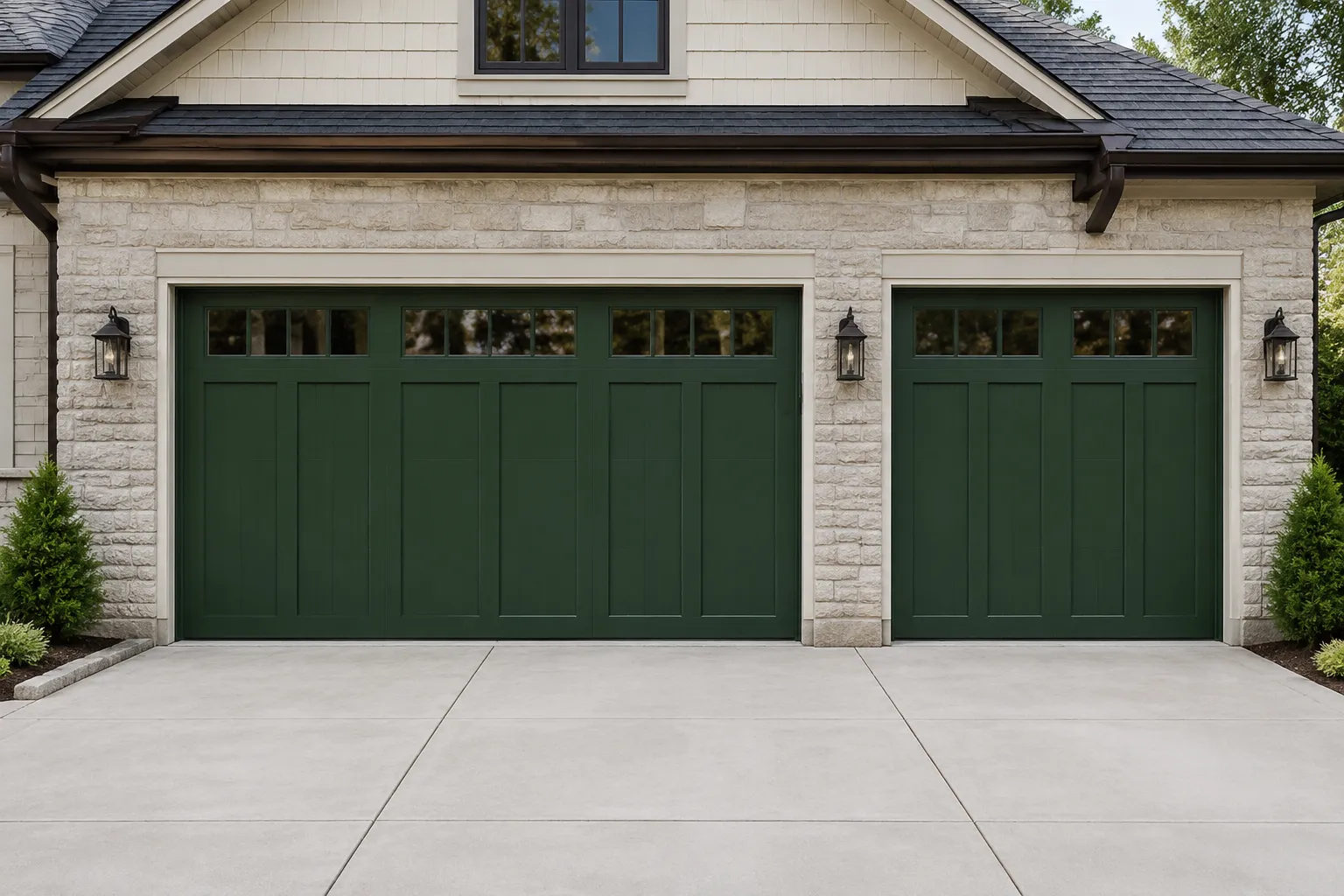
A steel door with pressed panel shapes and decorative hardware.
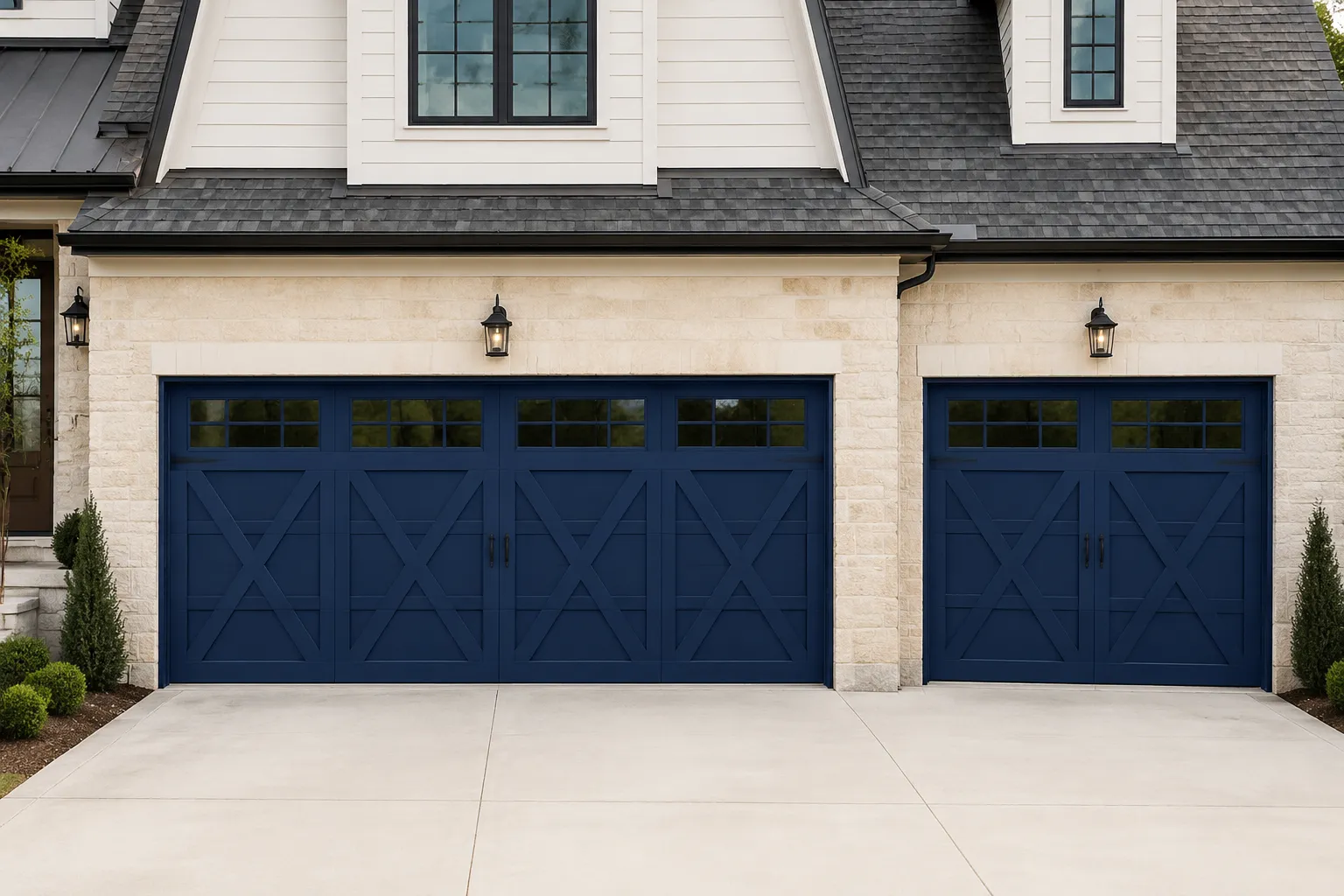
Applied trim creates deeper shadow lines and a more dimensional appearance.
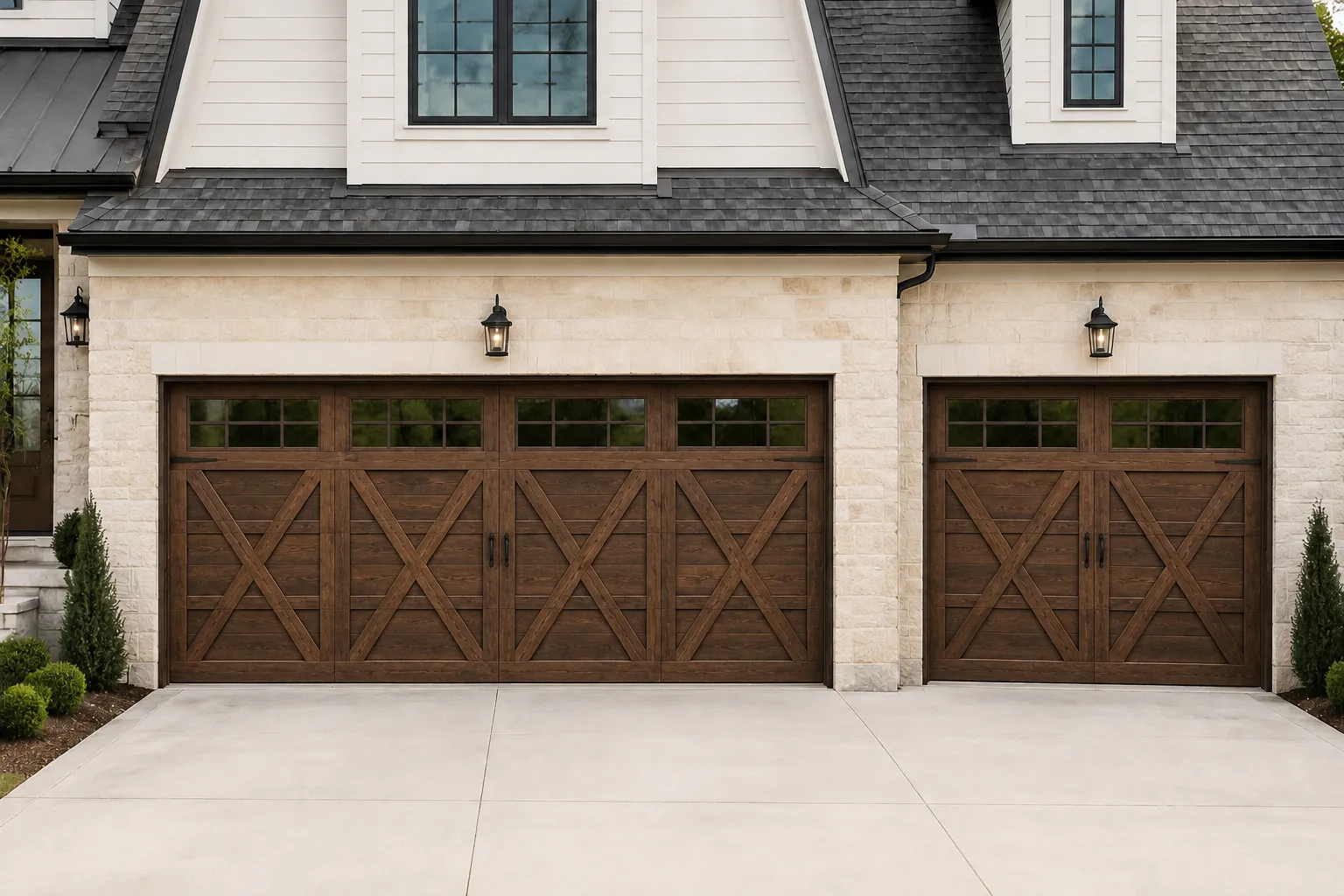
A warm grain finish creates a carriage look with engineered materials.
Colors and Finishes
Classic against brick, stone, and painted siding.
Soft traditional contrast.
Bold hardware and panel definition.
Medium-dark wood appearance.
Warm red-brown wood appearance.
Availability depends on the exact overlay and collection.
Trusted Brands
Amarr
Distinctive stamped-steel carriage design
A three-section carriage look with single-, double-, and triple-layer configurations and polystyrene or polyurethane insulation.
R-value: 6.64–13.35 depending on construction
View collectionProDoor Systems
Overlay carriage-house craftsmanship
Carriage-house overlay designs offered across multiple layer and insulation levels so appearance and performance can be compared together.
View collectionProDoor Systems
Value stamped carriage and shaker steel
Stamped Carriage and Shaker model families alongside Classic Raised designs for budget-conscious carriage looks.
View collectionBefore You Buy
Stamped and overlay systems differ in depth, weight, finish rules, thermal data, and repair options.
Stamped and overlay builds differ in weight.
Section count, breaks, windows, and centerlines change on wider, taller, or odd-size doors.
Layouts shift on wider or odd-size doors.
Heat absorption can conflict with approved colors, exposure limits, and warranty instructions.
Sun exposure can limit color choices.
Windows, overlays, struts, and hardware change weight, reinforcement, shipping, and lead time.
Windows and overlays add weight and time.
Plan Your Carriage Door
From selection to installation
Measure the opening and photograph the full elevation, interior clearances, floor, and operating system.
Measure and photograph the opening.
Compare constructions, actual-size layouts, samples, glass, hardware, and finish restrictions.
Compare layouts, samples and glass.
Install the approved sections, track, counterbalance, reinforcement, seals, and operator interface.
Sections, track, springs and seals installed.
Balance and safety-test the door, then review finish care, documents, and inspection points.
Balanced, safety-tested, care reviewed.
The craftsman homes off Taylor Boulevard and near Interstate 264 often have wide porches. Jacobs also has many English cottage houses framed by mature trees. A carriage-house door fits that character better than a plain ribbed panel. Its board pattern and hardware echo the detail already on the house.
A carriage-house door rolls up in sections like any overhead door. Its face imitates the old swing-out doors, with board patterns, strap hinges and handles. Square top lites or an arched top add to the effect. Wood-grain steel or composite carries the look without regular refinishing. Insulation is worth choosing where the garage shares a wall with the living space. The overlays add weight, so the springs are sized to the finished door. The opener is matched to that weight as well.
Service area coverage
Local ZIP: 40215
Carriage Door FAQ
As a planning range, common 8- to 9-foot single-car configurations run about $1,700–$2,900 and common 16-foot double-car configurations about $2,000–$4,600. Stamped steel may stay closer to common residential ranges, while overlays, custom windows, specialty finishes, and real wood can increase the final price.
Most residential replacements are installed in one scheduled visit once the complete door arrives from the manufacturer. Custom glass, overlays, special finishes, framing corrections or new track and opener work can add time. We confirm the lead time and your installation day before you order.
Yes. Removal and haul-away of the existing garage door can be included with the installation. The written quote lists what comes out, what stays (such as a working opener) and any related cost before work begins.
We provide a one-year warranty on our installation labor. The door, finish, glass, hardware, and operator also include the applicable manufacturer warranties for the products selected. We review those terms before the order is placed.
They are worth it when the garage faces the street and the house has farmhouse, Craftsman, cottage or historic character. A well proportioned carriage door gives the look of swing doors with everyday overhead operation. Stamped steel keeps the cost closer to a standard door, while overlay designs cost more for deeper detail.
No. Almost every carriage house garage door sold today is a sectional overhead door. The center line, vertical boards, windows and decorative handles give the look of paired swing doors, while the sections roll up on tracks inside the garage.
A stamped carriage house door has the board pattern pressed into its steel skin, which keeps cost and weight down. An overlay door adds composite trim or cladding on top of an insulated steel base. That extra layer gives deeper shadow lines, and it usually adds cost, weight and specific finish care.
Some are, but most are not. Many carriage house doors use steel, composite overlays, printed wood-grain finishes or fiberglass. We confirm the exact material before you order, because weight, maintenance, repairs and warranty terms all depend on it.
No-obligation quote
Keep exploring
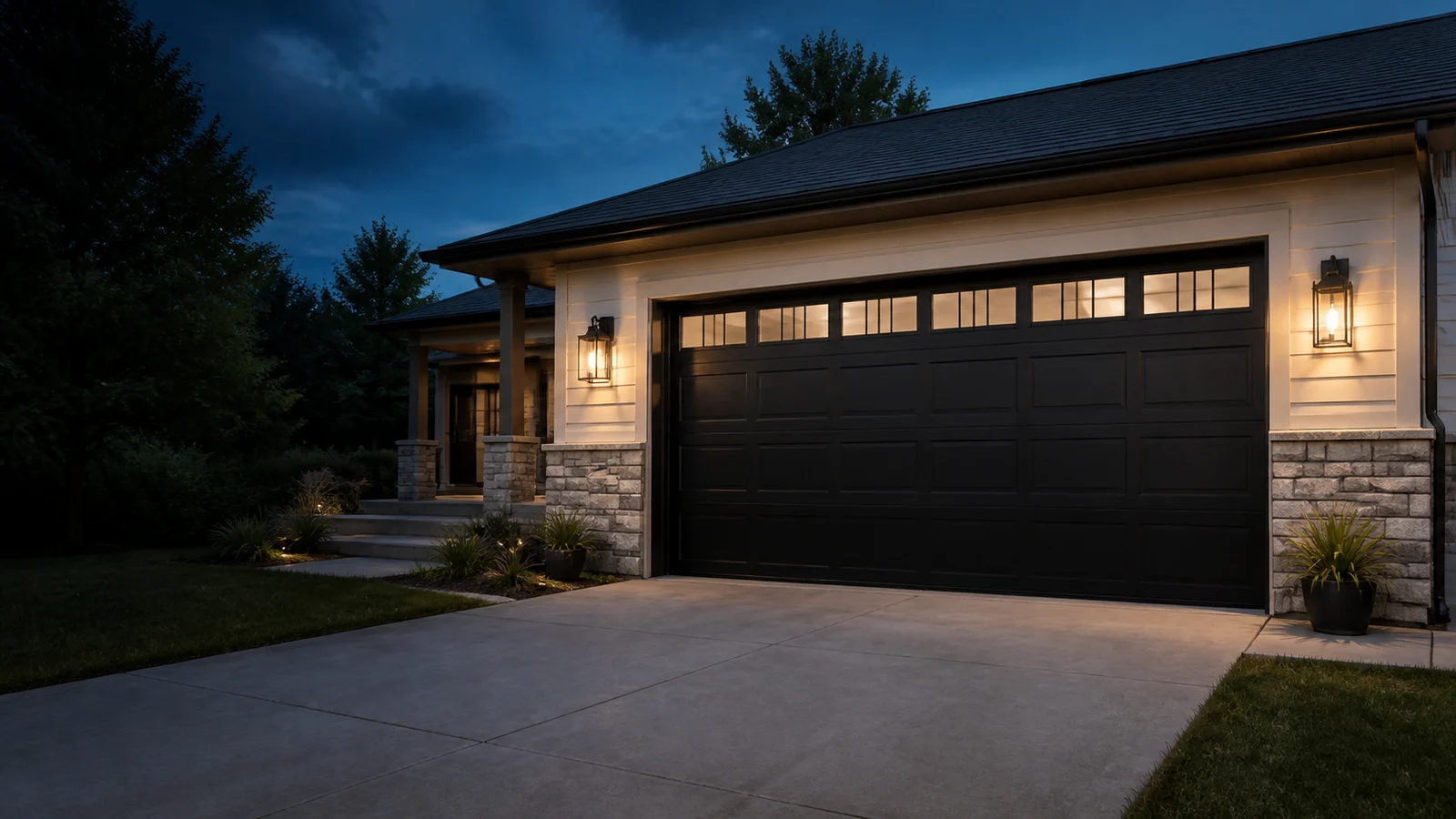
Durable, low-maintenance garage doors with flexible options for style, insulation, and budget.
Explore this door style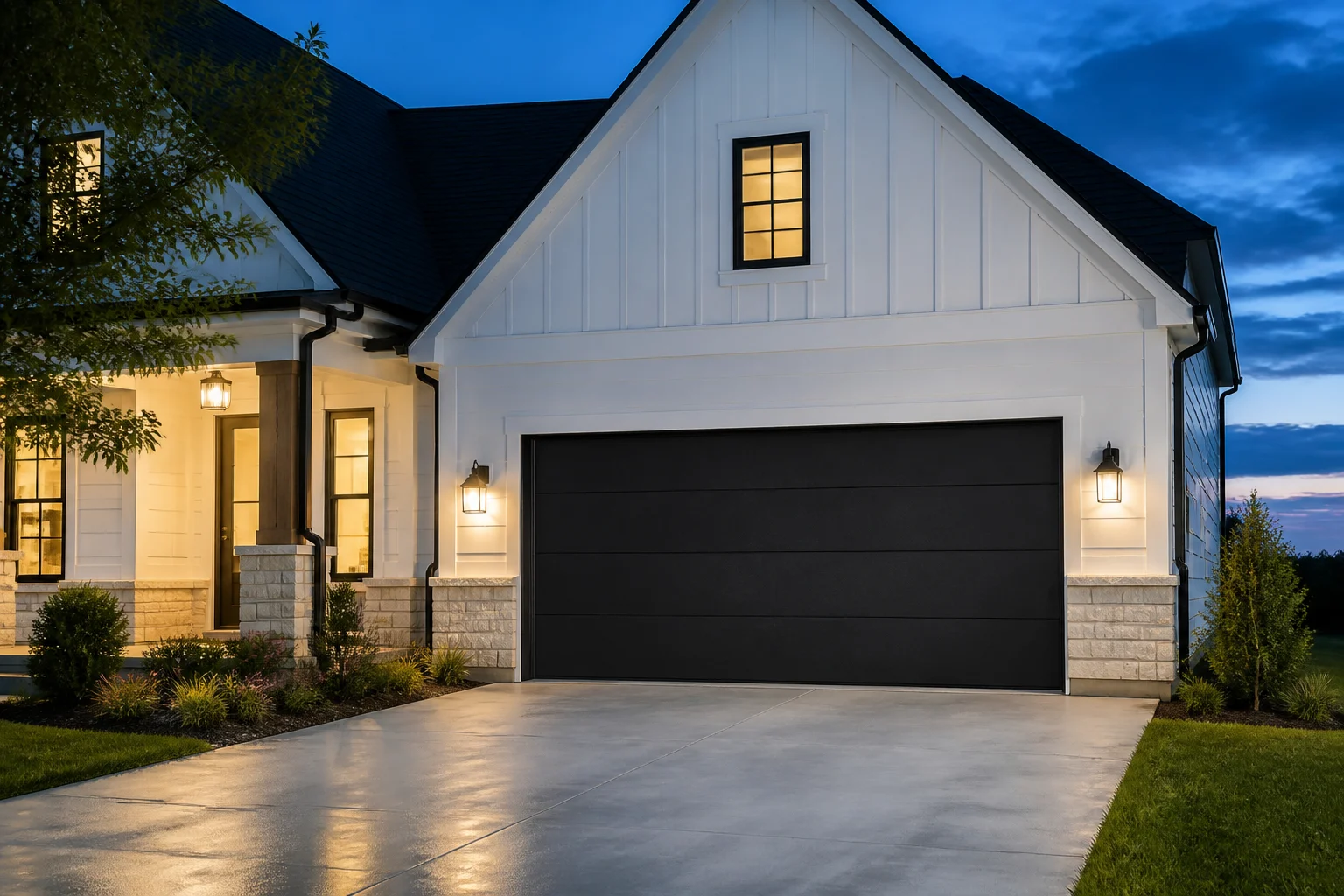
Flush faces, subtle grooves, plank lines, dark finishes, and asymmetric glass suit modern elevations.
Explore this door style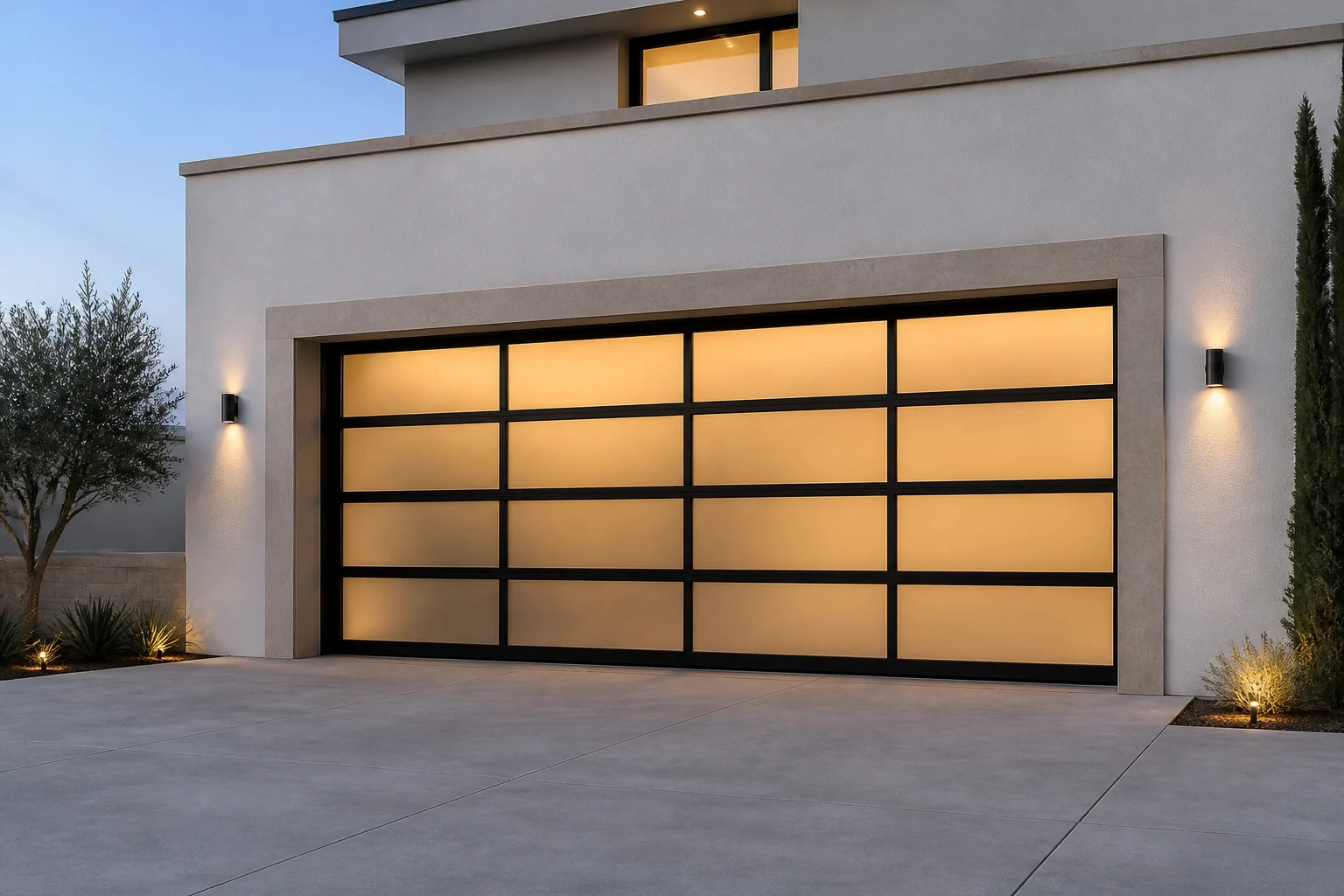
Aluminum frames and broad glass sections maximize light and create a distinctive architectural feature.
Explore this door style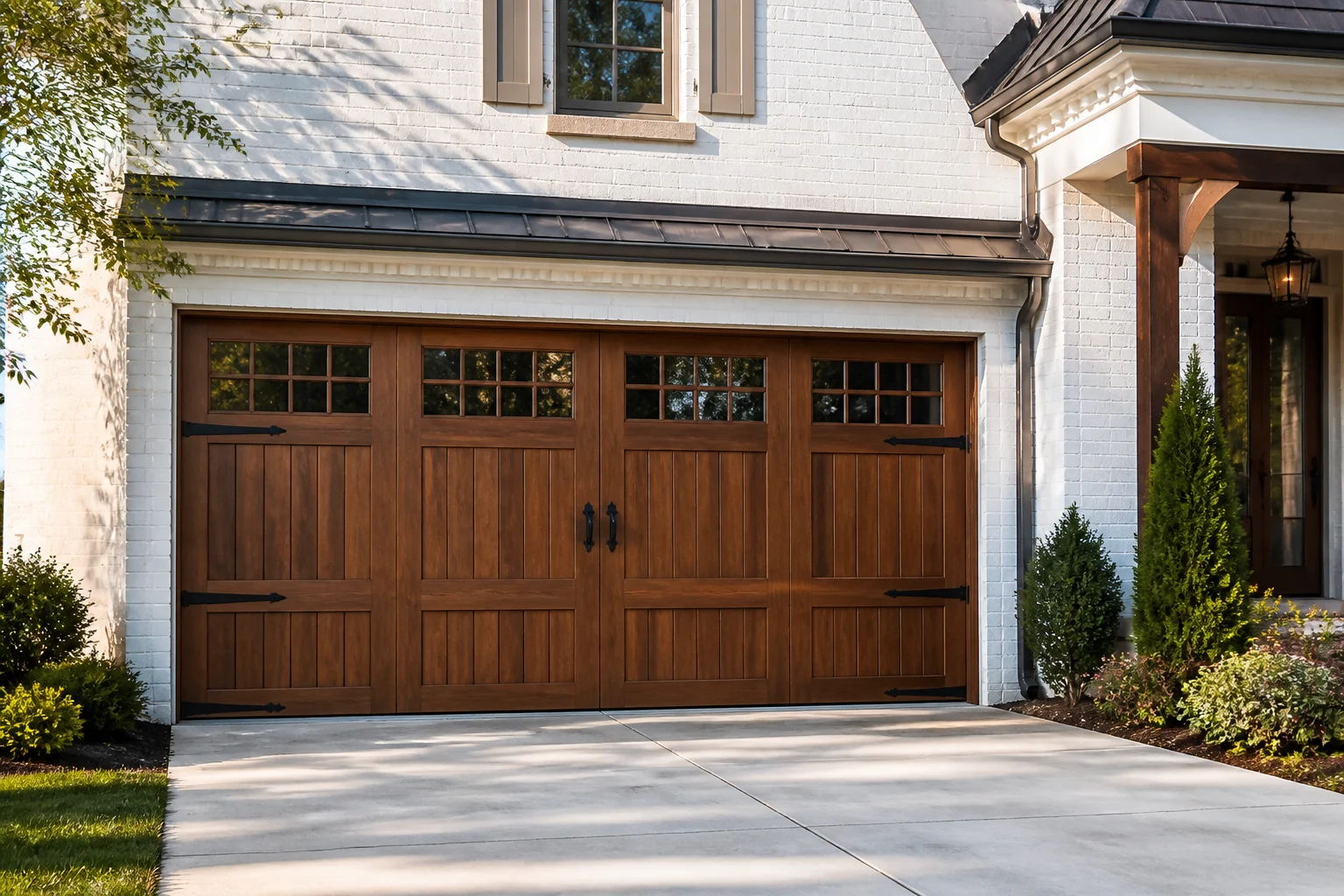
Printed, embossed, composite, and fiberglass faces offer wood character with different care and weight.
Explore this door style
Larger openings, high-cycle use, loading areas, wind, safety, and specialty hardware need project assessment.
Explore this door style