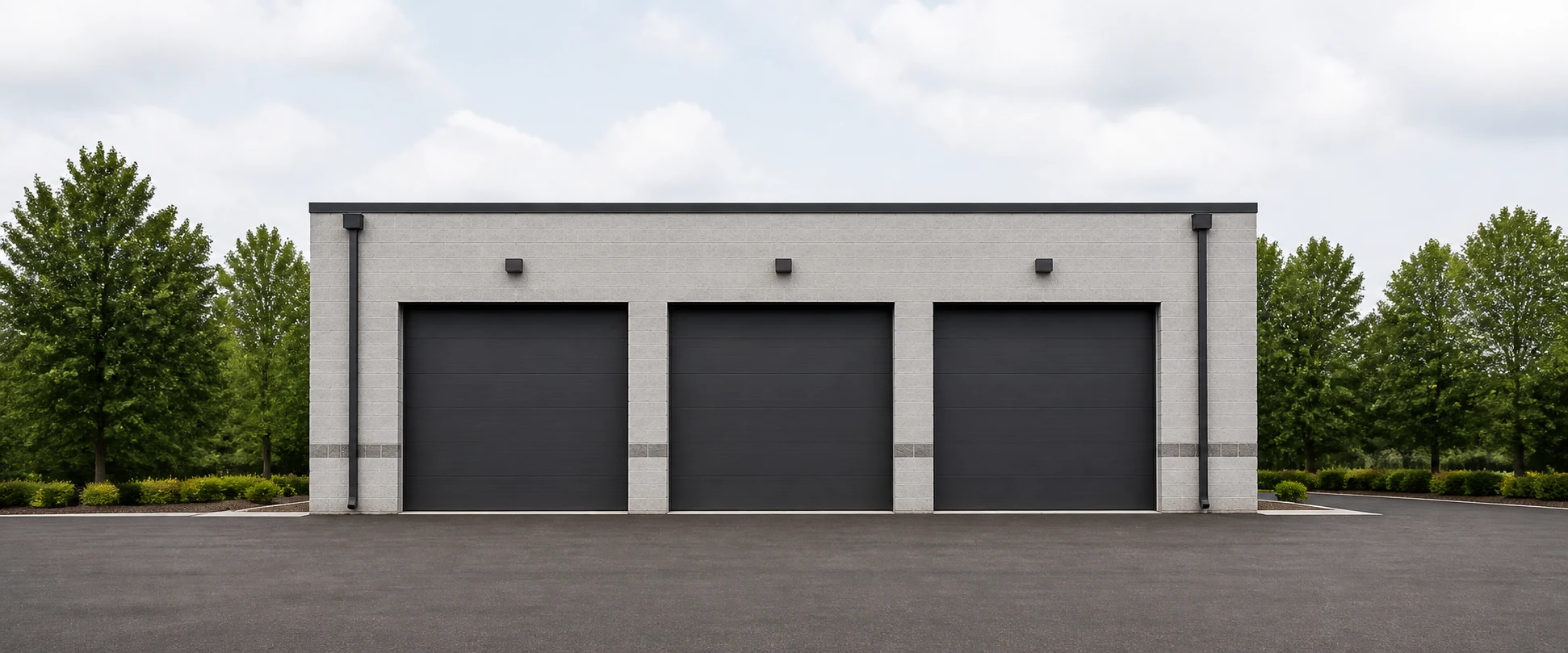
Dock & Industrial Equipment Service in Louisville, KY
Loading dock door and dock equipment service across Louisville starts with the dock's age, which decides how closely its face meets a modern trailer. Along I-65 we see old and new positions side by side. Reach our Louisville office at (502) 619-5198.
Along I-65, a dock's age decides how well it meets a modern trailer.



Loading dock service
One service plan for the door and the dock position
We service loading dock doors and connected industrial equipment in Louisville, KY, including sectional doors, rolling steel curtains, operators, levelers, restraints, safety edges, photo-eyes, seals, and bumpers. Our crews work around trailer traffic across Louisville Metro and nearby communities and report clear findings for the door, controls, and complete dock position.
Request service for this facilityWhat we handle
Focused support for this facility type
Dock door repair
Correct impact damage, track shift, spring and cable wear, operator faults, and unreliable controls.
Levelers and restraints
Inspect dock leveler operation, restraint interfaces, warning devices, and related bay hardware.
Safety verification
Test monitored edges, photo-eyes, emergency release functions, and full open-close cycles before handoff.
Why Derby Strong
Commercial service you can hand back to the team
- Active-site coordinationWork is planned around trailers, traffic, and your dock supervisor.
- Commercial-grade repairsParts and adjustments are matched to the equipment and cycle demand.
- Clear documentationTested items, completed repairs, and follow-up needs are recorded.
Dock and industrial door service across Louisville
Across the river from Louisville, Clarksville sits low along the Ohio River and has been under water outright in the past. At a loading dock on ground like that, the pit beneath the leveler needs a clear drain. Where a building along I-65 has a dock door, its age decides how closely the dock face meets a modern trailer. An older dock leaves the leveler a wider gap to bridge.
Hydraulic and mechanical levelers wear in different places. A hydraulic unit is checked for leaks, while a mechanical one is checked at its springs. The bumpers stop each trailer short of the wall. The lip has to land flat on the trailer bed, or its hinge takes the load on one side. A restraint keeps the trailer from drifting as forklifts cross. A torn seal or shelter is replaced. The dock door's photo-eyes and safety edge are tested before the position goes back into service.
Service area coverage
Commercial service FAQ
Loading dock and industrial service questions
01 What are the signs a loading dock leveler needs repair?
A lip that will not extend or lands unevenly on the trailer bed, a platform that drifts or sticks, and oil around the pit are the usual signs. Hydraulic levelers tend to leak, while mechanical ones wear at the springs. At Louisville docks along I-65, the leveler is run through a full loading sequence to find the failing part.
02 When should dock seals be replaced at a Louisville warehouse?
Replace them when the pads are torn, flattened or no longer press against the trailer, because the gaps let rain and outside air into the building. Worn bumpers make it worse by letting trailers strike the wall and seal frame. A torn seal or shelter is assessed apart from the leveler and restraint, so the repair covers what actually failed.
03 Why does a loading dock need a vehicle restraint?
A restraint holds the trailer at the dock so it cannot drift away while forklifts cross the leveler. If it fails to engage or lets go early, that position should not be loaded until it is repaired. On Louisville docks, restraint engagement is tested together with the leveler and the bumpers that stop each trailer short of the wall.
04 Do Louisville docks on low ground need the leveler pit checked?
Yes. Clarksville, across the Ohio River from Louisville, sits low along the water and has flooded before, and a leveler pit on ground like that needs a clear drain so water does not sit around the hydraulics or springs. A dock inspection also tests the door's photo-eyes and safety edge before the position goes back into use.
Request commercial service