Printed wood-look steel
The most straightforward way to add grain and warm color to an insulated steel door.
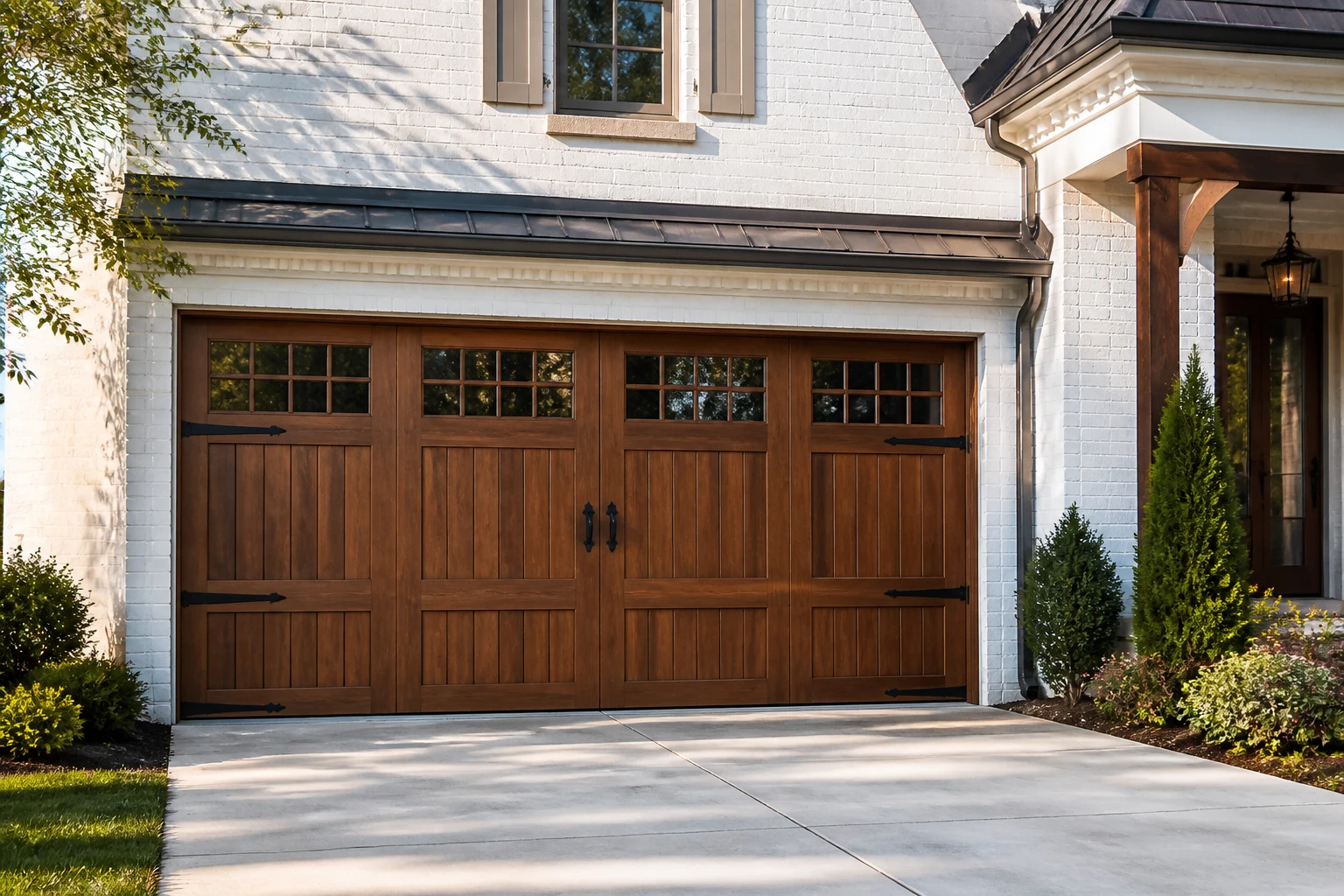
Wood-look garage door installation in Muldraugh gives an older house near Brandenburg Station Road a stained grain that keeps its tone. Painted boards need fresh coats every few years, while steel or composite panels do not.
A wood-look door keeps its tone on an older Muldraugh house.




Wood-Look Doors Explained
A wood-look garage door gives you the warmth of cedar, walnut or oak without the sanding and staining a real wood door needs. The grain comes from printed or embossed steel, composite cladding, or a molded fiberglass face over steel.
Each material wears differently. Printed steel is the lightest and usually the most affordable. Composite and fiberglass faces carry deeper grain and board depth, and their extra weight must be matched by the springs and opener.
Color and grain change with light and distance. Compare finish samples beside your front door, trim and siding before choosing, and we confirm the exact material and its care before the order is placed.
Materials and Finish
The most straightforward way to add grain and warm color to an insulated steel door.
A structural steel base with an engineered exterior face for added depth.
A molded face provides pronounced grain and a different finish and repair profile.
Applied trim creates carriage or plank styling without using a full real-wood door.
Popular Styles
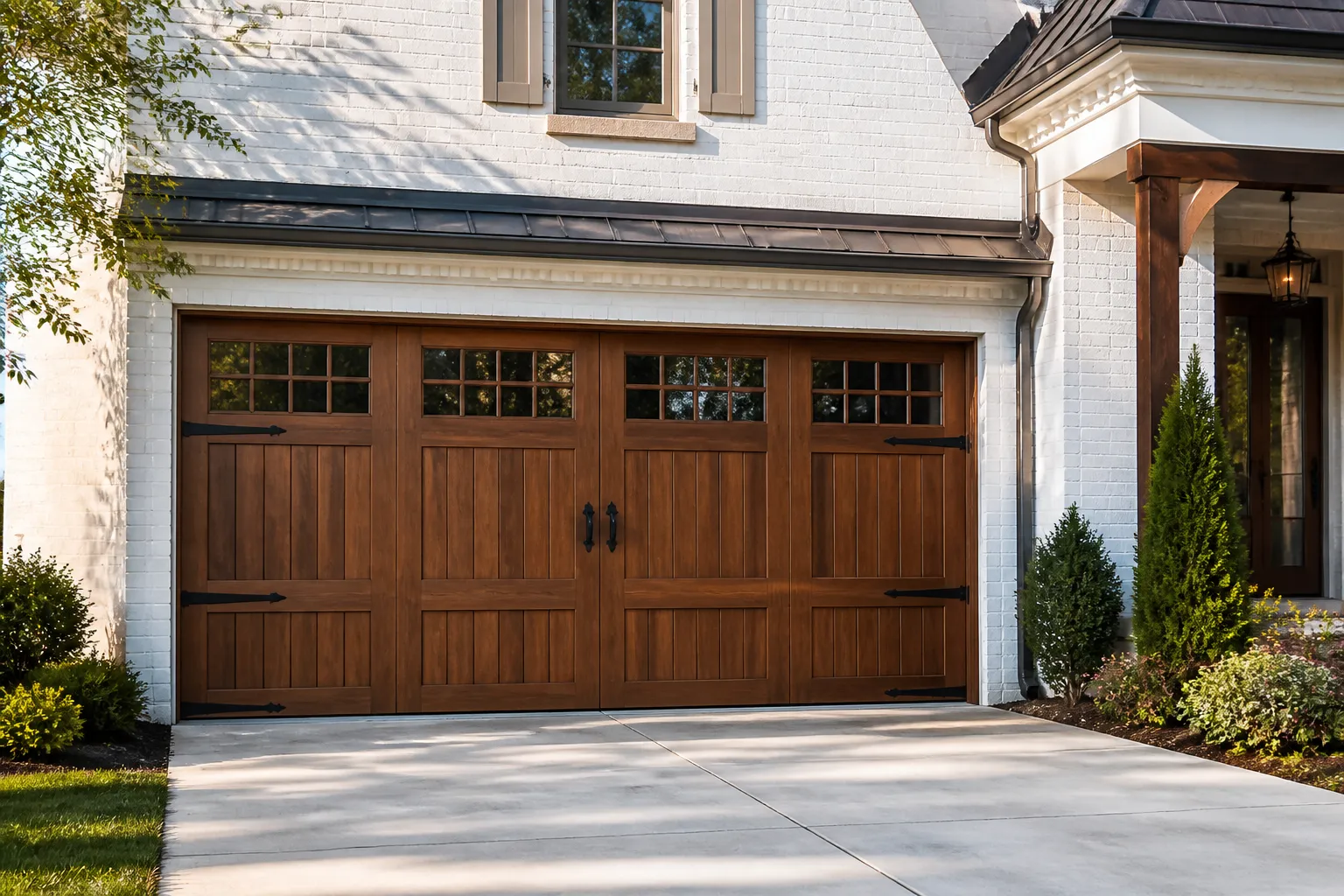
A factory-applied grain pattern on a sectional steel door.
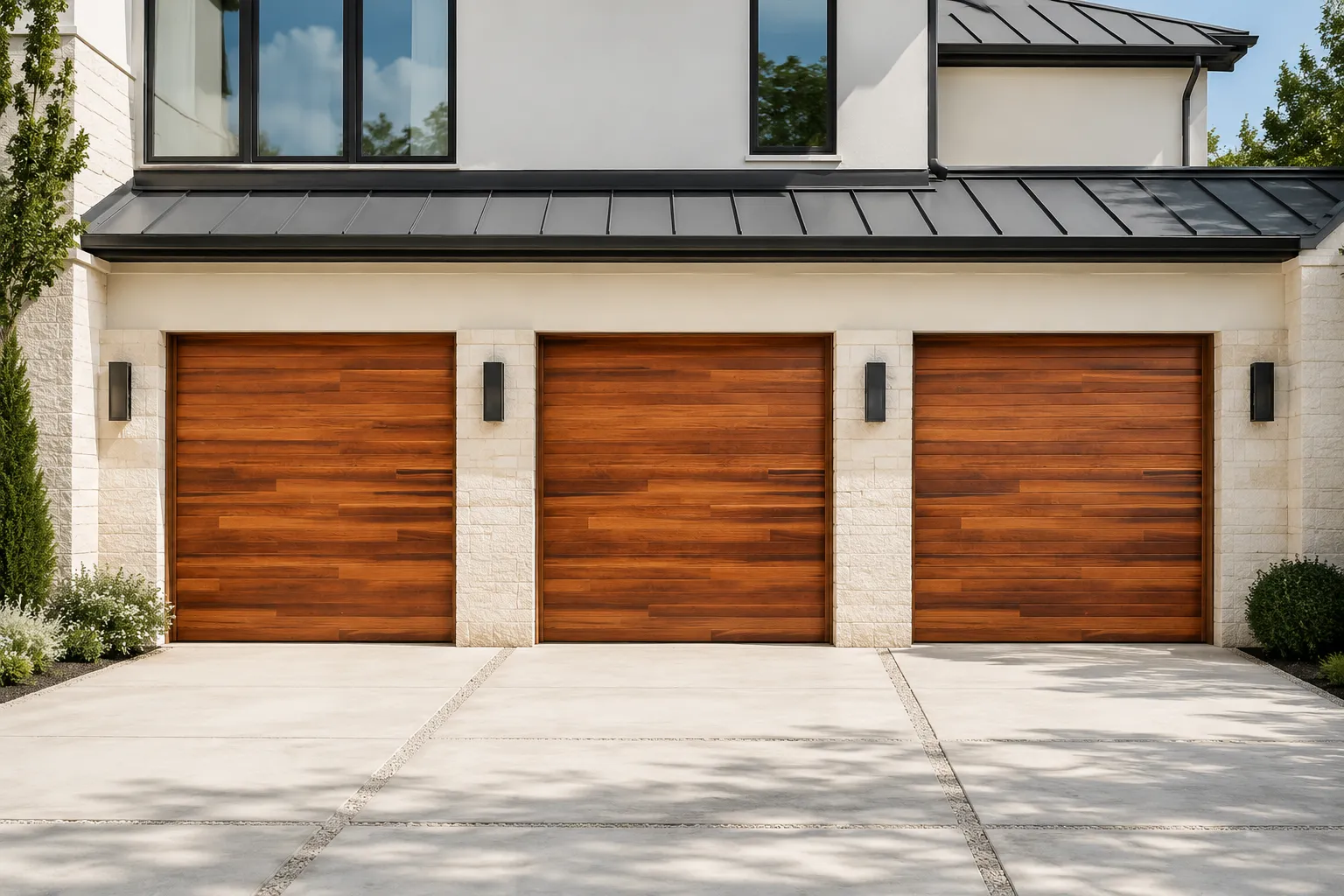
Engineered trim and cladding create deeper grain and shadow lines.
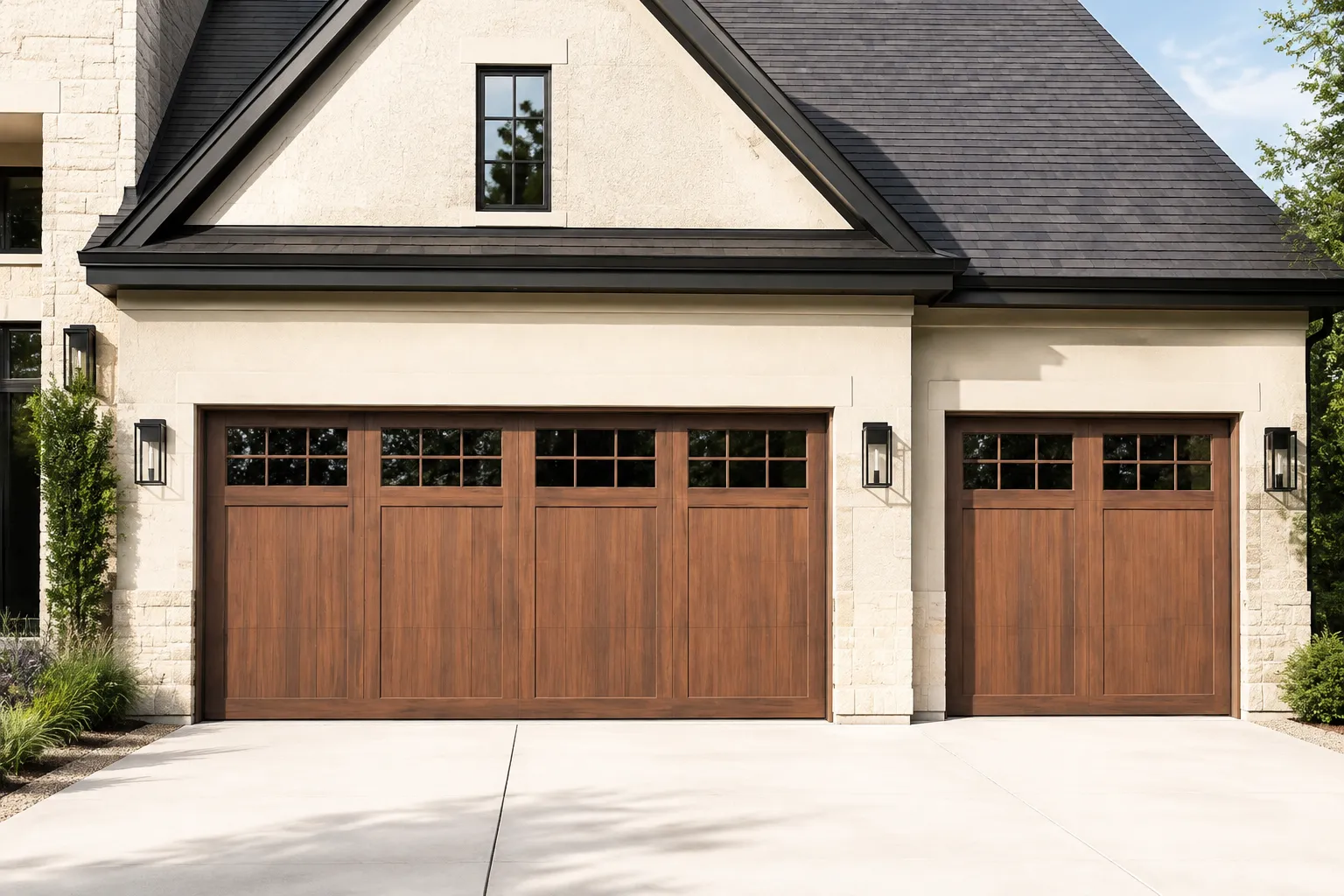
A formed surface creates a dimensional wood appearance with engineered materials.
Wood Tones and Finishes
Warm, lighter wood appearance.
Balanced medium-dark brown.
Rich red-brown tone.
Deep brown with strong grain contrast.
Cooler gray-brown finish.
Lighter neutral wood appearance.
Trusted Brands
Amarr
Steel base with wood-look finish options
Traditional steel construction in single-, double-, and triple-layer options. Woodgrain finish availability is confirmed on the exact model and size before ordering.
View collectionProDoor Systems
Insulated steel with woodtone options
Panel and design families built around higher thermal performance. Woodtone finish availability is confirmed per model and size before ordering.
View collectionBefore You Buy
Similar wood looks can be printed steel, fiberglass, or composite with different ownership.
Similar looks, different materials.
Screens hide undertone, sheen, embossing, repetition, plank scale, and seams.
Judge real samples, not screens.
Engineered surfaces still need cleaning, inspection, approved touch-up, and seal care.
Still needs cleaning and seal care.
Cladding, glass, reinforcement, and width alter springs, hardware, transport, and opener setup.
Cladding and glass change the weight.
Plan Your Wood-Look Door
From selection to installation
Measure the opening and document the elevation, adjacent materials, sun, water exposure, and clearances.
Measure the opening and exposure.
Compare material and finish samples, actual-size layouts, glass, care guides, and approved construction.
Compare materials and finish samples.
Install sections, track, counterbalance, reinforcement, seals, hardware, and opener interface.
Sections, track, springs and seals installed.
Balance and safety-test the door, inspect the finish, and hand off care and warranty records.
Safety-tested, with care records.
A wood-look door gives an older Muldraugh house the warmth of stained wood without the repainting. The town's homes, close to the long ridge of Muldraugh Hill, are mostly older, from Brandenburg Station Road to U.S. Route 31W. On one of those, a grained door suits the age of the house better than a glossy flat one. It also keeps its tone where painted boards would need fresh coats.
Steel or composite panels take the grain, so the door looks like wood without behaving like it. It will not split, swell or need refinishing. Oak and walnut tones hold their color through humid summers. A plain carriage or flush pattern keeps the look restrained. On a detached garage, an uninsulated version may be all it needs. We check the opening and the opener before the new door goes in.
Service area coverage
Local ZIP: 40155
Wood-Look Door FAQ
As a planning range, common 8- to 9-foot single-car configurations run about $1,700–$2,900 and common 16-foot double-car configurations about $2,000–$4,600. Printed steel may stay closer to common residential pricing, while composite cladding, fiberglass faces, overlays, premium finishes, and added weight can increase the installed price.
Most residential replacements are installed in one scheduled visit once the complete door arrives from the manufacturer. Custom glass, overlays, special finishes, framing corrections or new track and opener work can add time. We confirm the lead time and your installation day before you order.
Yes. Removal and haul-away of the existing garage door can be included with the installation. The written quote lists what comes out, what stays (such as a working opener) and any related cost before work begins.
We provide a one-year warranty on our installation labor. The door, finish, glass, hardware, and operator also include the applicable manufacturer warranties for the products selected. We review those terms before the order is placed.
For many homes, yes. A wood-look door brings the warmth of wood to brick, stone or siding without the regular sanding and staining a natural wood door needs. Printed steel keeps the price modest, while composite and fiberglass faces cost more for deeper, more realistic grain that holds up to a closer look.
Usually not. A wood-look garage door gets its grain from printed or embossed steel, composite cladding or a molded fiberglass face over steel. Knowing the exact material matters, because it changes the price, weight, realism and care.
Factory-finished steel is usually the simplest, with occasional washing and quick touch-ups of any scratches. Composite and fiberglass faces also need far less work than real wood, though each has its own cleaning routine. No exterior door is completely maintenance free.
Good printing and embossing look convincing from the street. Composite and fiberglass faces add deeper grain and board depth that hold up closer in. The best test is to view large samples from the distance people usually see your house.
No-obligation quote
Keep exploring
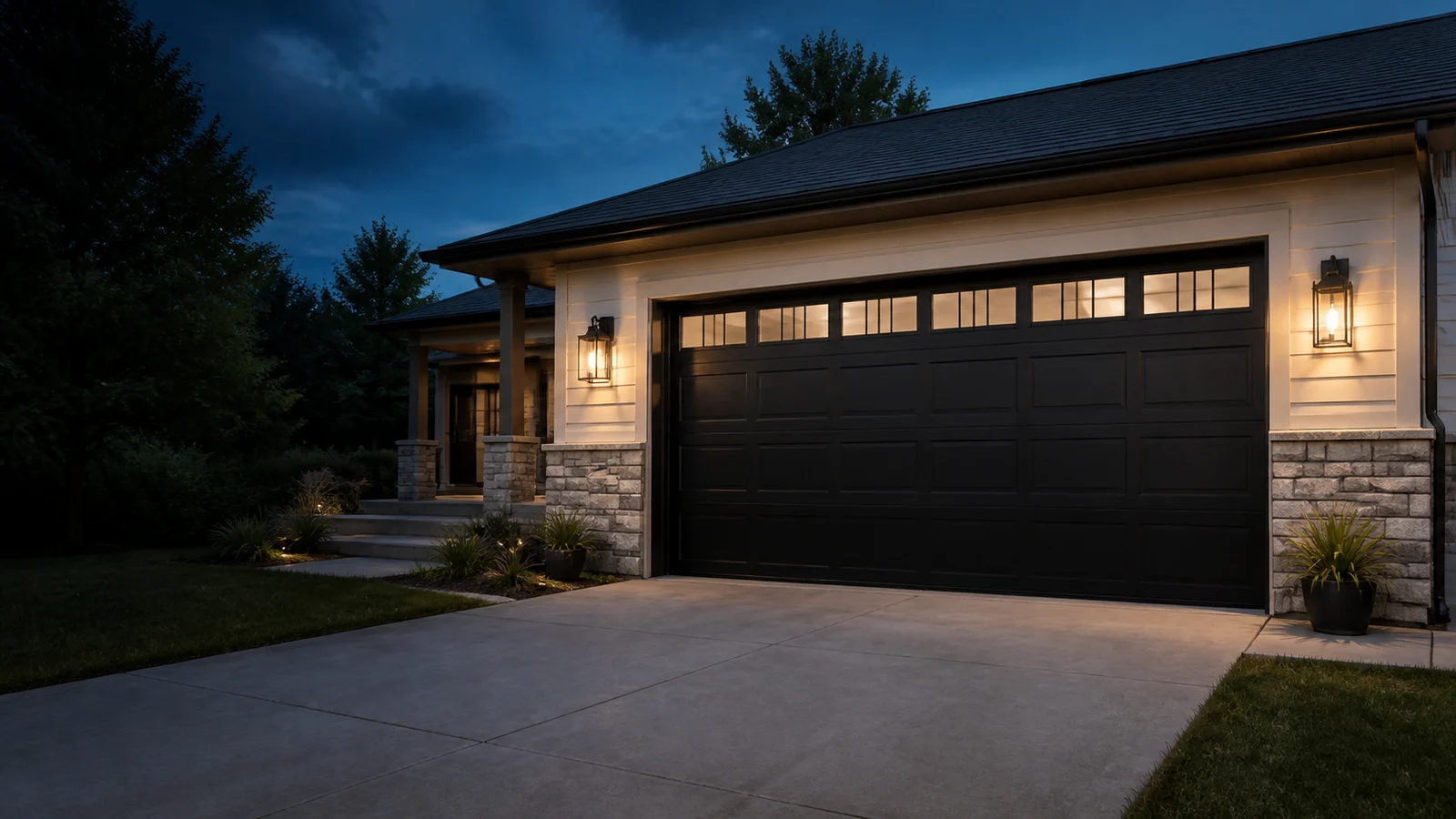
Durable, low-maintenance garage doors with flexible options for style, insulation, and budget.
Explore this door style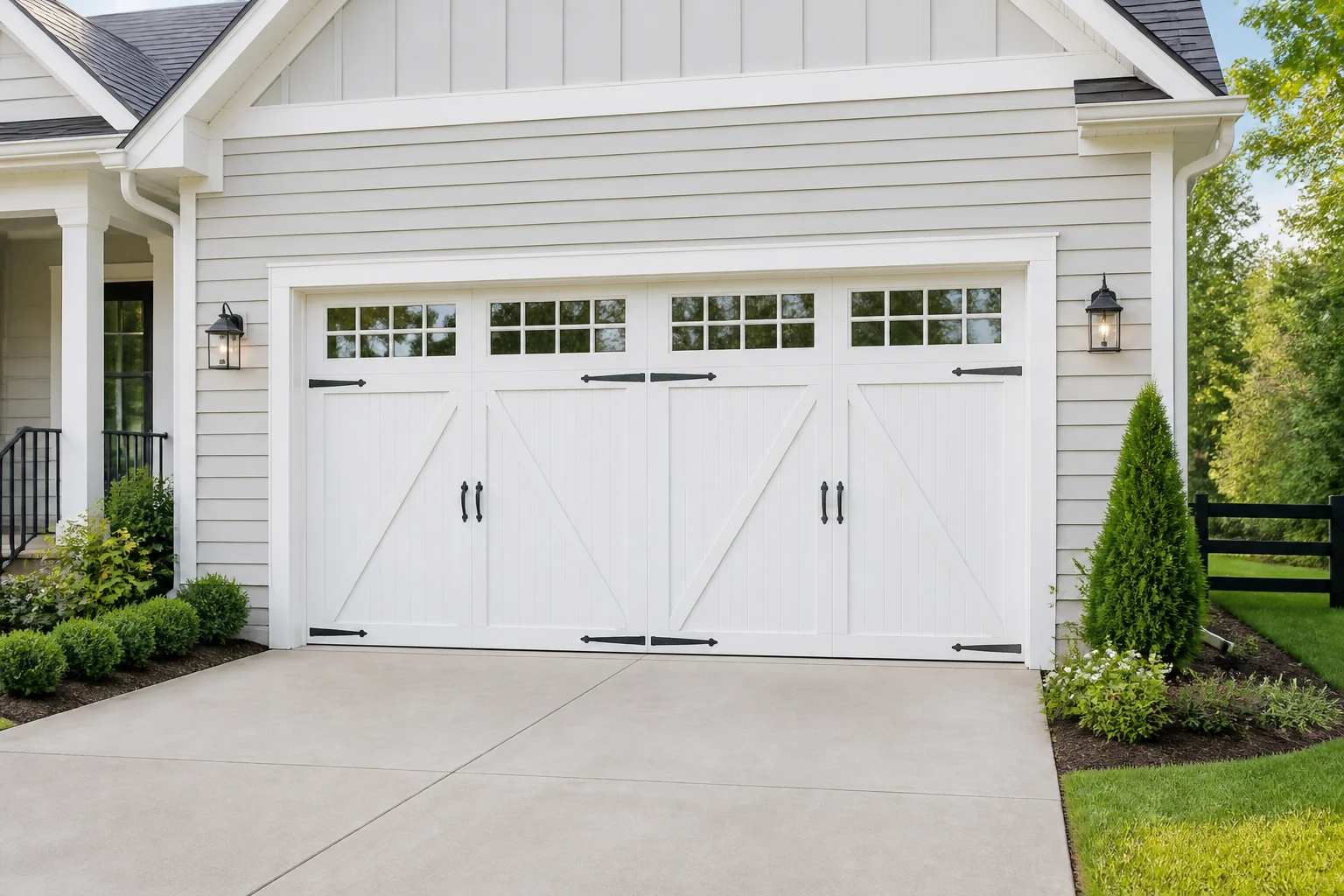
Stamped or overlay designs create a swing-door look while operating as a sectional overhead door.
Explore this door style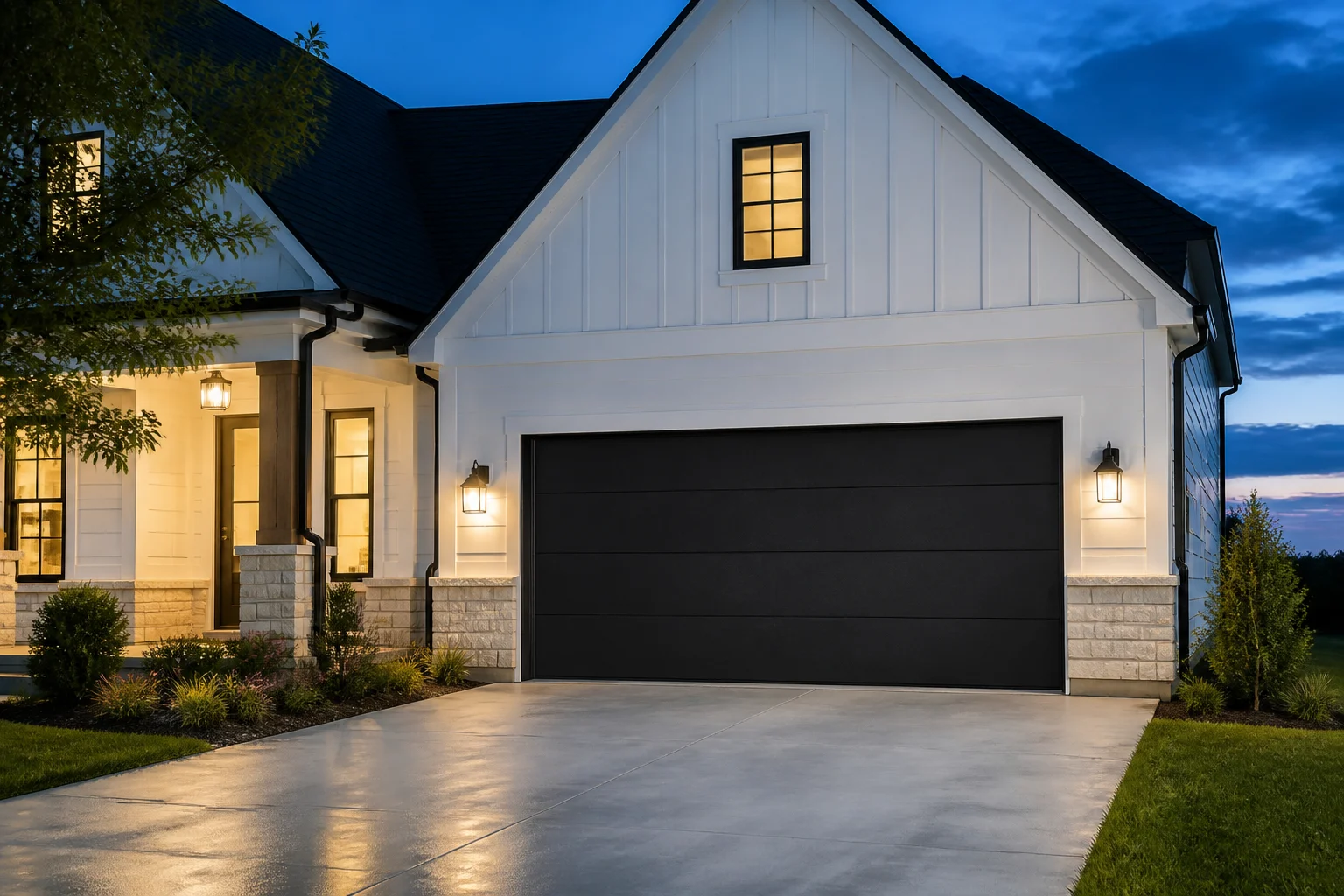
Flush faces, subtle grooves, plank lines, dark finishes, and asymmetric glass suit modern elevations.
Explore this door style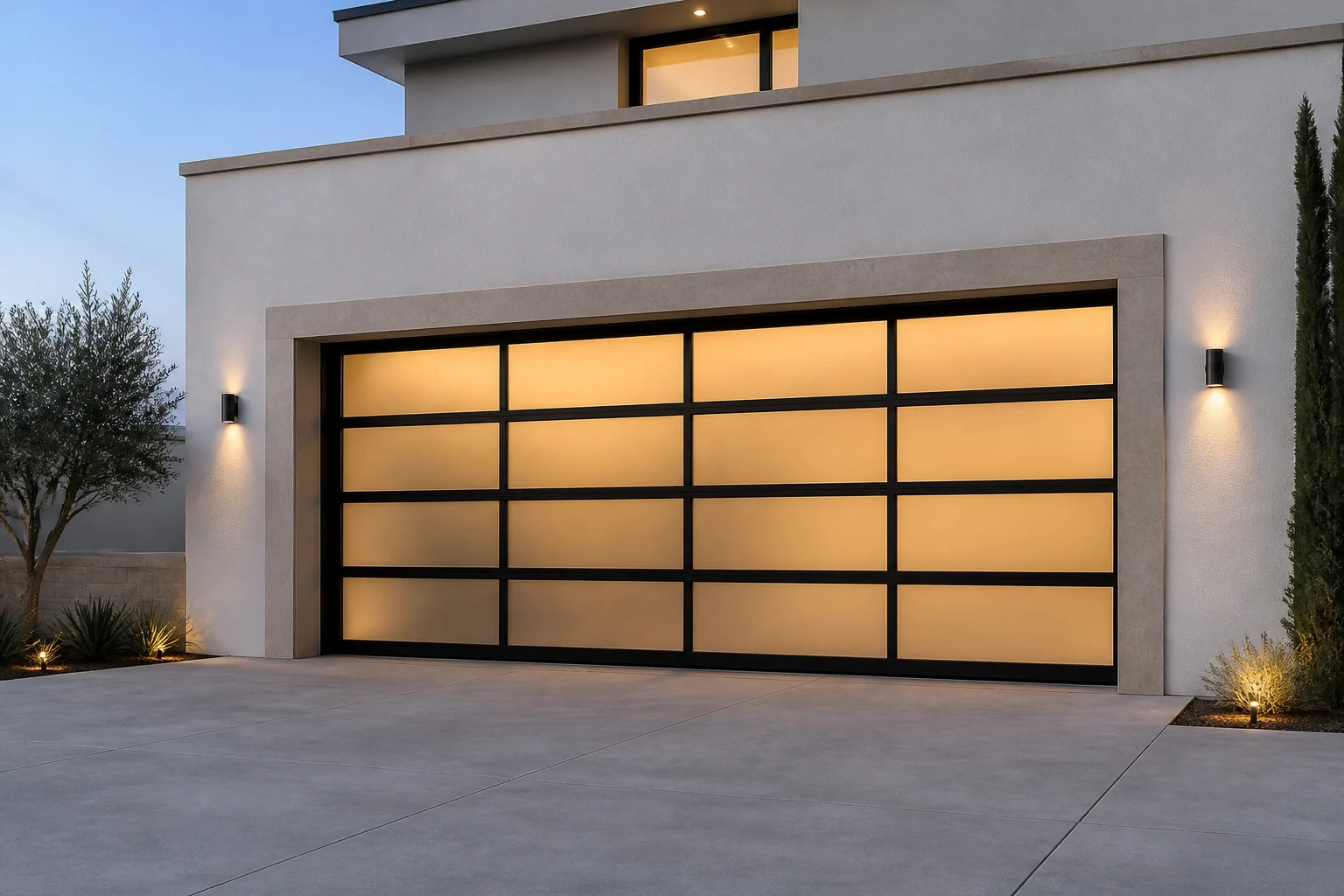
Aluminum frames and broad glass sections maximize light and create a distinctive architectural feature.
Explore this door style
Larger openings, high-cycle use, loading areas, wind, safety, and specialty hardware need project assessment.
Explore this door style