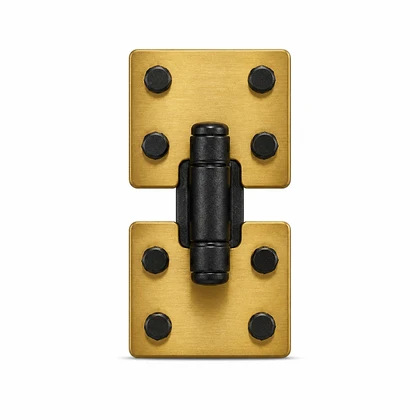
Standard option
Steel rollers
- Sound
- Louder metal-on-metal movement
- Maintenance
- Needs periodic lubrication
- Best for
- Detached garages and budget repairs
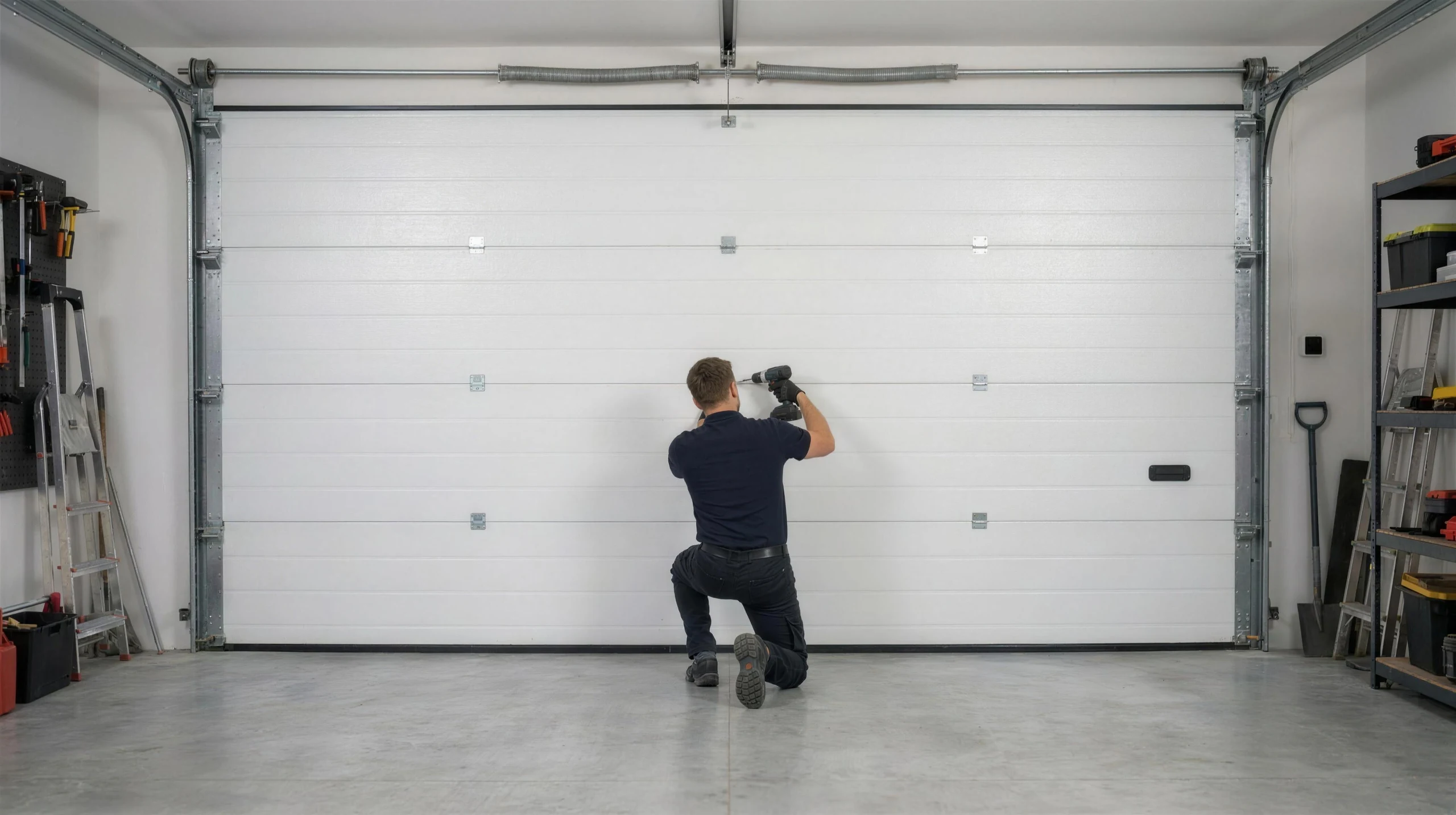
In the Thomson neighborhood, older garages often carry rollers swapped a few at a time, so garage door roller replacement in Winchester starts by making the set match. We fit sealed nylon rollers and check the hinge that holds each stem.
Older Thomson garages often carry rollers swapped a few at a time over the years.




Safety check
What to do now
A squeaky or shaky door can usually wait for a scheduled visit—just skip the extra cycles. If a roller has left the track or a hinge has cracked, stop using the door and keep the opening clear. Never loosen a bottom bracket: it anchors the lift cable and stays under spring tension.
Customer reviews
Know the hardware
Standard option
Quieter upgrade
Have an unusual roller? Send us a photo taken safely from the floor and we’ll help identify it.
Plastic rollers without bearings are common on new construction and often wear out within 5,000–10,000 cycles. Heavier and commercial doors use 3-inch rollers, and low-headroom or high-lift systems use specific top-roller and long-stem hardware that must be matched exactly.
Not sure what you have? Send a photo of one hinge and roller from the floor. We can usually identify wheel size, stem type, and hinge style before the appointment, then confirm on site.
Hardware selection
We check each roller for cracks, flat spots, rust, missing balls, and play on the stem. One bad roller is a symptom—the rest of the set has the same age and cycle count.We check every roller for cracks, rust, flat spots, and looseness.
Short- and long-stem rollers, 2-inch and 3-inch wheels, and #1–#5 hinges are not interchangeable. The replacement must match the track profile, hinge position, and door weight so the door tracks true.The wheel, stem, and hinge must match your exact door and track.
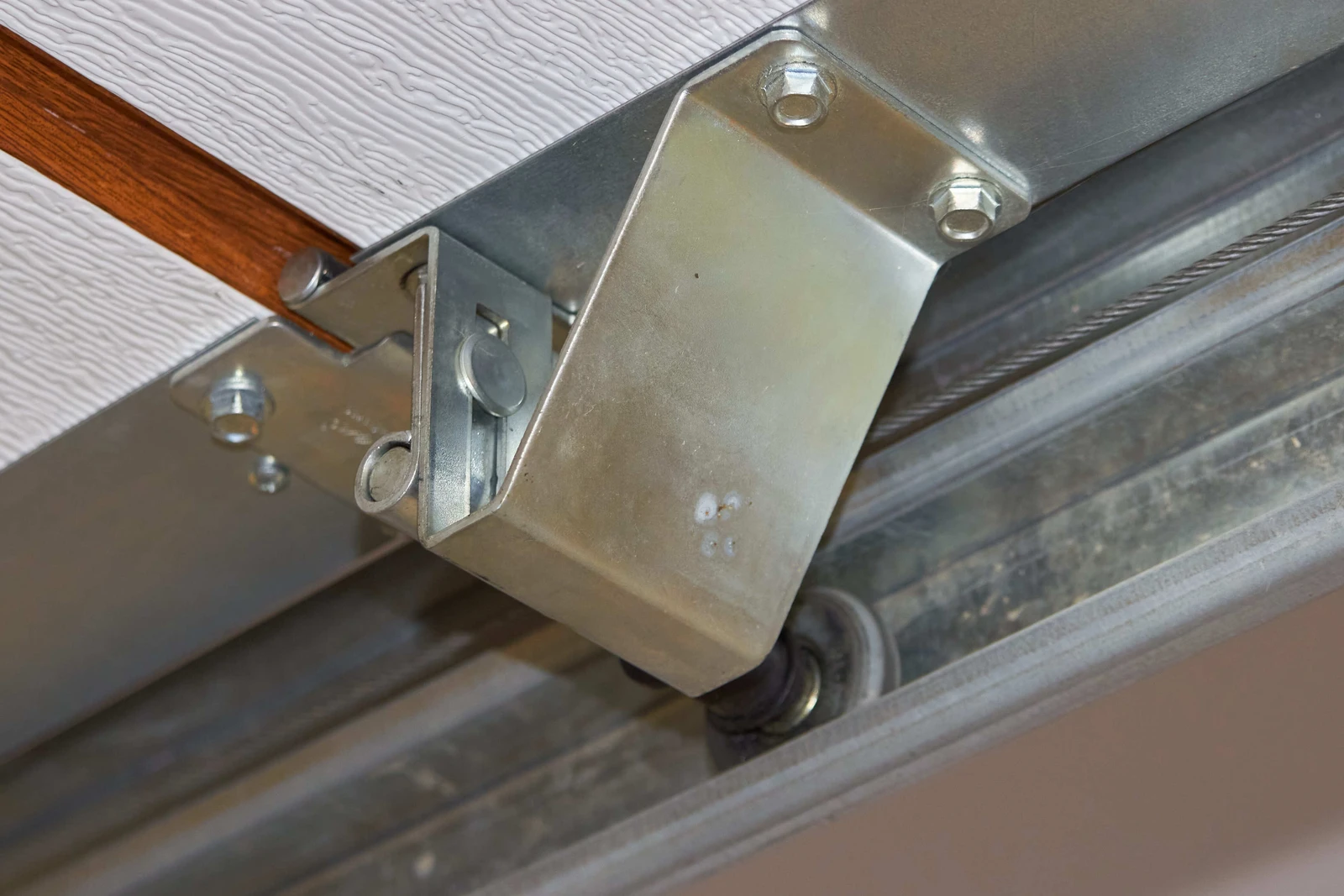
Cracked hinge leaves, elongated bolt holes, stripped fasteners, and worn section joints are corrected at the same time. A new roller in a fatigued hinge still shakes.We check for cracked hinges and loose or damaged mounting points.
The bottom rollers sit in the bottom brackets, which anchor the lift cables and stay under spring tension. We check the cables, drums, and balance and replace the bottom fixtures only with the door secured.We inspect the cables and balance without disturbing tensioned parts.
Rollers are replaced as a set: a four-section door carries ten rollers and a five-section door carries twelve, all with the same age and cycle count. Swapping only the one that failed usually means another visit soon, and mixing old and new rollers creates uneven wear. The technician should explain what the set includes for your door before work begins.Best practice: Replace worn rollers as a matched set for smoother, more reliable movement.
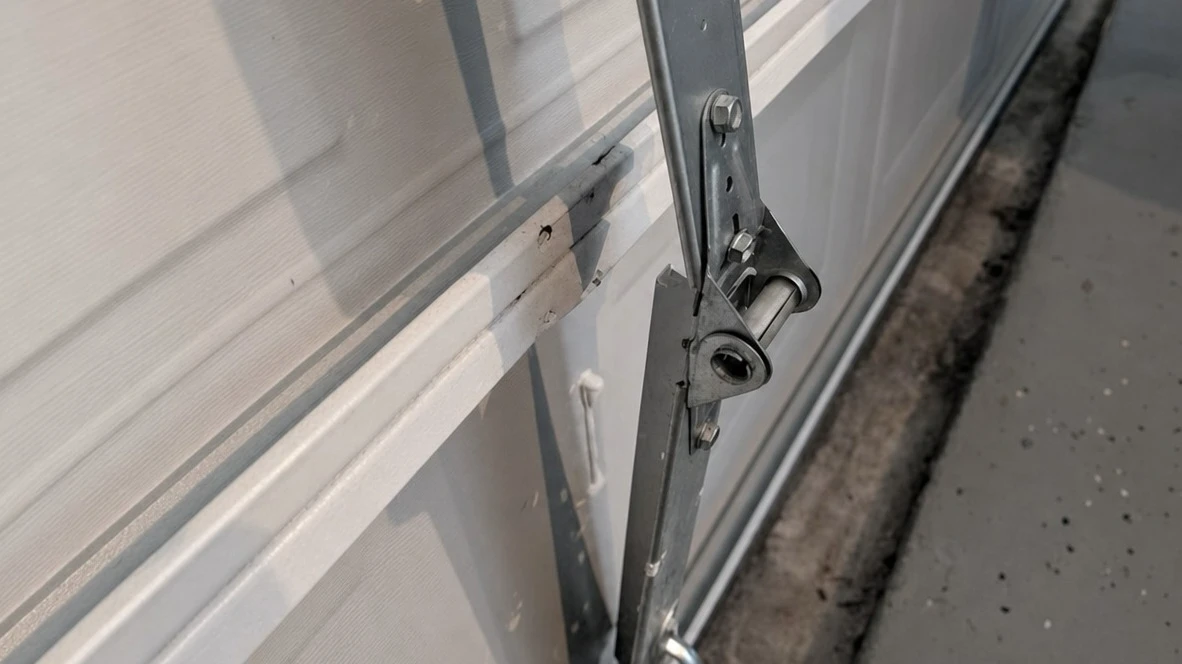 Before · Worn hinge and roller
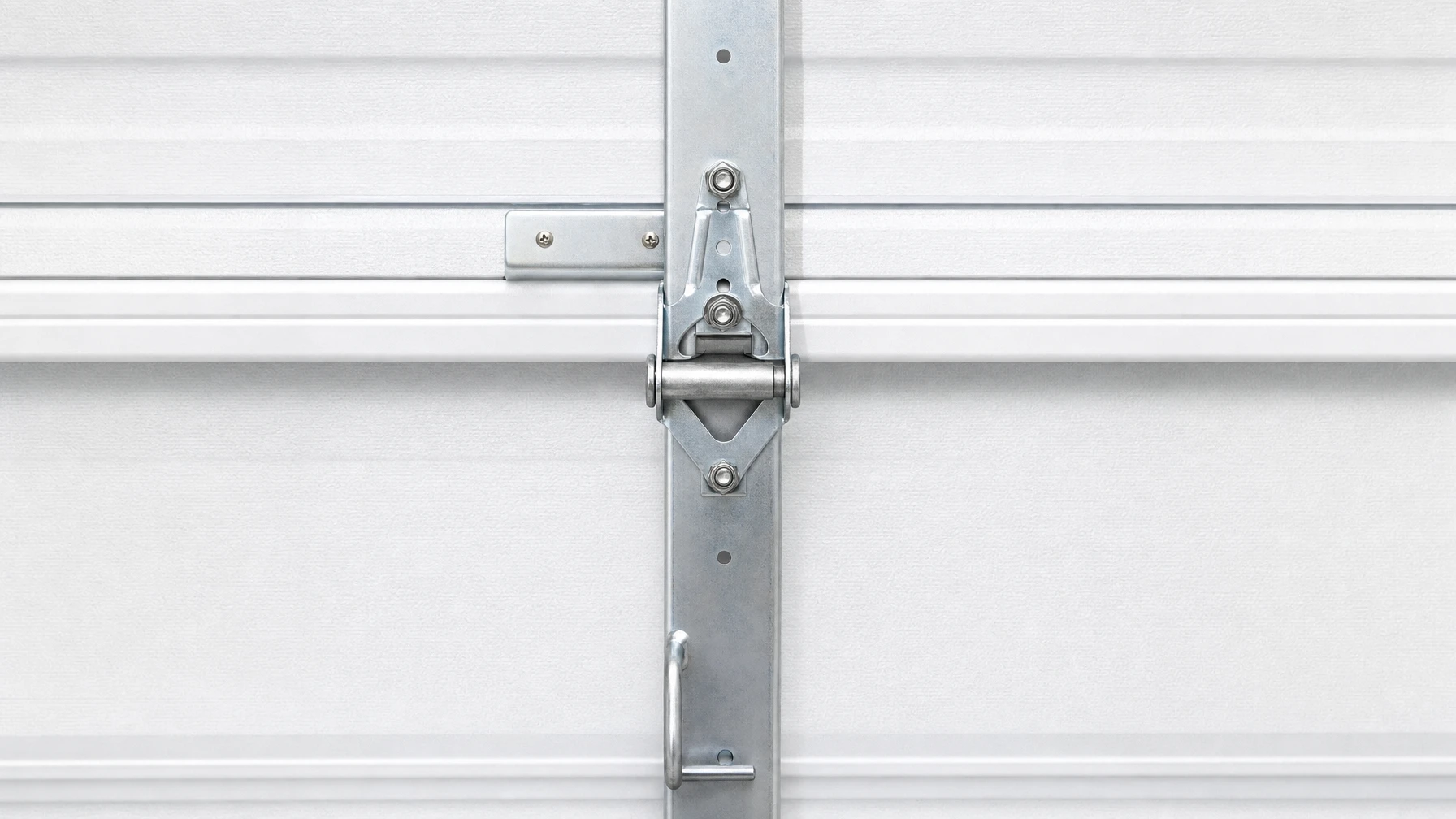 After · Replaced hardware
Service and pricing
The technician documents rollers, hinges, tracks, bottom brackets, cables, springs, balance, and opener force before quoting.Full door checked, then quoted.
Roller type, wheel size, stem length, hinge numbers, and gauge are selected for the actual door and track—not by appearance alone.Matched to your door and track.
Rollers and hinges are swapped one position at a time with the door clamped and supported. Bottom fixtures are handled under controlled tension.One at a time, door secured.
Fasteners are torqued, hinges lubricated, the door balanced and cycled, and opener force and reversal tested before we leave.Lubricated, cycled and tested.
The Thomson neighborhood in Winchester, with its large Victorian homes, still keeps many original garages among its older outbuildings. Rollers on a door that old may have been swapped a few at a time over the years. South Park's garages went up after its houses were built, so a roller set there may be newer than the home around it.
Rollers carry each door section along the track on a short steel stem. Bare steel rollers grind as their bearings wear, while nylon rollers run noticeably quieter. A flat spot or cracked wheel makes the door shake through its travel. We replace the full set so every roller turns alike. The hinge holding each stem gets a look at the same time. Once balanced, the door should roll up with a steady, quiet sound.
Service area coverage
Local ZIP: 40391
Before you schedule
A full set of sealed nylon rollers on a standard residential door typically runs $275–$450 installed, and a full steel set $225–$375. Individual hinge replacement is usually $35–$65 per hinge, with several hinges priced as a set, and a bottom bracket with its roller is typically $95–$175 per side. Final pricing depends on the roller type and wheel size, the number of sections, door weight, how many hinges are involved, and the condition of the bottom brackets, cables, tracks, and balance. Commercial, 3-inch, and specialty low-headroom hardware may fall outside these ranges.
A standard four-section residential door uses ten rollers: two per section plus two top rollers. A five-section door uses twelve. Because the set shares the same age and cycle count, rollers are almost always replaced together rather than one at a time.
Sealed nylon rollers with a 13-ball bearing are the usual recommendation for an attached garage: they run quieter, resist rust, and the sealed bearing keeps grit out. Steel 10-ball rollers cost less and are durable, but they are louder and need periodic lubrication. Builder-grade plastic rollers without bearings should be replaced when they show wear.
Roller life is measured in cycles, not guaranteed years. Builder-grade plastic wheels are often rated for only 5,000–10,000 cycles and can fail within a few years of daily use; unsealed steel rollers are commonly rated around 10,000–15,000 cycles with regular lubrication; and quality sealed nylon rollers are commonly rated for tens of thousands of cycles and can serve well over a decade. Actual life depends on door weight, balance, track condition, and how often the door is used.
Not always, but they should be inspected at the same time. Hinges are replaced when they are cracked, bent, rusted through, or have elongated bolt holes, and when a section joint no longer holds tight. Replacing a hinge means matching its number (#1–#5) and gauge so the roller sits at the correct offset for the track.
Residential hinges are stamped with a number, usually #1 through #5. #1 hinges join the sections at the center of the door and along the lower joints; higher numbers sit farther up each side and hold the roller stem farther out so the roller follows the track as the door curves overhead. Installing the wrong number causes rubbing, binding, or a roller that pops out.
The bottom rollers sit in the bottom brackets, which anchor the lift cables and remain under spring tension whether the door is open or closed. Removing a bottom bracket without securing the door and releasing tension correctly can cause serious injury. Middle and top rollers are less hazardous but still require the door to be clamped, and mismatched hardware can leave the door binding or off track. We recommend professional service for the full set.
Rollers and hinges are the most common cause of squeaking, grinding, and rattling, but noise can also come from loose track brackets, a worn opener chain or gear, an unbalanced spring system, or loose fasteners. Part of the visit is confirming the source before parts are replaced.
Use a garage-door-specific silicone or white lithium spray on hinge pivots and on the bearings of unsealed steel rollers about every six months, and keep it off the track surface, where grease collects grit. General-purpose penetrating spray such as WD-40 displaces water and degreases—it is not a long-term lubricant and can leave a gritty paste. Sealed nylon rollers do not need bearing lubrication; a light film on the stem is enough.
If the noise comes from worn wheels, dry bearings, or loose hinges, a full set of sealed nylon rollers with sound hinges usually makes a clear difference. If the door is also unbalanced, or the opener chain and rail are worn, those need attention too for a quiet result.
Usually, for an attached or busy garage. Sealed-bearing nylon rollers run quieter and need less lubrication than basic steel rollers, and they tend to last longer. On a lightly used detached garage, standard rollers can be enough. We match the roller to the track, the stem length and how often the door runs.
Local help for a noisy or shaky doorNeed service?
Let us know whether the door is a single or double, whether it still opens and closes, what the noise sounds like, and whether a roller has left the track. Keep clear of the opening if a section is out of line.